Whether you're finishing a new project in Houston, renovating a commercial space in Atlanta, or converting a garage in Tampa, understanding drywall installation cost is essential for accurate budgeting. In and property owners across Texas, Florida, and Georgia are navigating rising labor rates, material fluctuations, and an ongoing skilled worker shortage that directly impacts project timelines and expenses.
FlexCrew connects construction businesses with qualified drywall installers, finishers, and skilled tradespeople across these high-demand markets. This guide breaks down current pricing, explains what drives costs up or down, and shows how strategic workforce planning keeps your drywall projects on budget and on schedule.
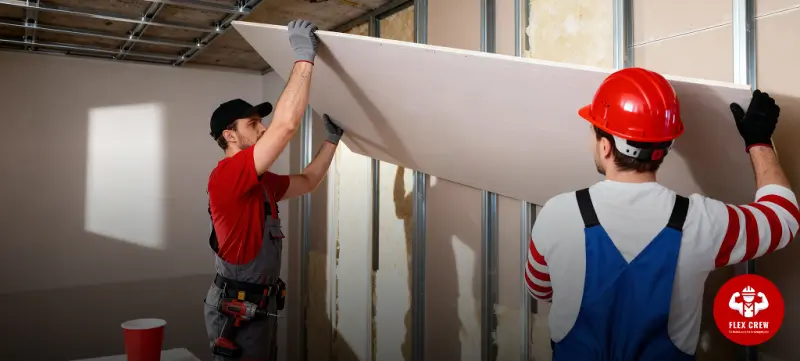
Drywall Installation Cost Per Square Foot (2026)
The national average drywall installation cost in 2026 ranges from $1.50–$3.50 per sq ft, including materials, labor, and basic finishing (taping, mudding, sanding).
Most contractors use $2.20–$2.65 per sq ft as a realistic midpoint for standard residential or light commercial work.
Since labor makes up nearly 70% of the total cost, regional wage differences significantly impact final pricing. Working with staffing partners like FlexCrew helps contractors in Texas, Florida, and Georgia secure skilled drywall crews without hiring delays.
Cost Table: Drywall Installation Cost Per Sq Ft & Project Size (2026)
Category | Details | Cost Range |
|---|---|---|
Cost Per Sq Ft (National Average) | Materials + labor + basic finishing | $1.50 – $3.50 |
Common Contractor Midpoint | Typical pricing used for estimates | $2.20 – $2.65 |
Labor Share of Total Cost | Approx. 70% of project cost | Varies by region |
Drywall Installation Cost by Project Size
Project Type / Size | Approx. Sq Ft | Estimated Cost Range |
|---|---|---|
Small Bathroom | ~100 sq ft | $400 – $650 |
Standard Bedroom | ~300 sq ft | $900 – $1,500 |
Living Room / Large Area | ~500 sq ft | $1,400 – $2,800 |
Basement Finishing | 1,000–1,500 sq ft | $2,000 – $5,000+ |
Regional Pricing: Texas, Florida, and Georgia Markets
Drywall installation cost varies significantly based on location. Construction markets in major metros face higher labor rates, while rural areas typically see lower per-square-foot pricing. However, travel costs and limited workforce availability can offset those savings in remote locations.
Texas remains one of the most active construction markets in the nation. The state added over 42,000 construction jobs between 2023 and 2024, creating strong demand for skilled drywall installers in Dallas-Fort Worth, Houston, Austin, and San Antonio. Texas drywall installation costs typically range from $1.50 to $3.00 per square foot, with wages expected to increase 2.5% to 3% in 2026. Material supply chains remain relatively stable here compared to coastal markets.
Florida's construction sector is experiencing rapid growth, adding nearly 37,000 construction jobs recently. Miami, Tampa, Orlando, and Jacksonville are hotspots for residential development and commercial projects. Labor costs in Florida are climbing faster than in Texas, with expected increases of 4% to 6% this year. Hurricane-resistant building codes and moisture-resistant drywall requirements add to material expenses. Expect drywall installation costs between $1.75 and $3.50 per square foot across most Florida markets.
Georgia's construction market centers heavily around metro Atlanta, where population growth continues driving housing and commercial development. Approximately 30% of Georgia's construction workforce is foreign-born, making the state particularly sensitive to labor supply fluctuations. Pricing in Georgia generally falls between Texas and Florida rates, with drywall installation cost averaging $1.60 to $3.25 per square foot.
What Factors Influence Drywall Installation Cost
Several variables determine your final drywall installation cost. Understanding these factors helps you budget accurately and make informed decisions about materials, labor, and project scope.
Drywall Type and Thickness
Standard half-inch drywall costs between $10 and $20 per 4x8 sheet and works for most interior walls. Fire-resistant (Type X) drywall, required in garages and certain commercial applications, adds about 20% to material costs. Moisture-resistant green board for bathrooms and basements runs $0.55 to $0.70 per square foot. Soundproof drywall for music rooms or privacy-sensitive spaces costs $1.85 to $3 per square foot—three to four times standard pricing.
Finish Level Requirements
Drywall finish levels range from Level 0 (no finishing) to Level 5 (premium smooth finish). Level 0 and Level 1 finishes suit utility spaces and areas hidden behind other materials. Level 3 finishing works well for textured walls and ceilings. Level 4 finishing accommodates most standard paint applications. Level 5 finishing provides a flawless surface for high-gloss paints and critical lighting conditions. Each step up adds approximately $0.25 to $0.40 per square foot to labor costs. Level 5 finishes can add $2.00 to $4.00 per square foot beyond basic hanging costs.
Room Complexity and Accessibility
Simple rectangular rooms with standard 8-foot ceilings allow fast, efficient installation. High ceilings, vaulted spaces, cathedral ceilings, and complex architectural details increase labor time significantly. Ceiling work costs more than wall work because installers must work overhead, often with lifts or scaffolding. Tight spaces, historic buildings, and renovation projects with existing fixtures add 25% to 100% to baseline labor costs. Basements with irregular shapes, pipes, and wiring require careful cutting and fitting that slows production.
How the Labor Shortage Affects Drywall Installation Cost
The construction industry needed approximately 439,000 additional workers in 2026 to meet demand. As of mid-2026, over 306,000 construction positions remain unfilled nationwide. This shortage directly impacts drywall installation cost through higher wages, project delays, and reduced contractor capacity.
Skilled drywall installers, finishers, and carpenters are among the hardest roles to fill. Industry experts consistently cite framers, drywall installers, and finishing carpenters as critical shortage areas. Texas and Florida both have approximately 38% foreign-born construction workforces, and Georgia stands at 30%. Immigration policy changes and enforcement actions have tightened labor availability in these markets, pushing wages higher and extending project timelines.
For contractors managing multiple projects, workforce gaps create a domino effect. If drywall crews aren't available on schedule, subsequent trades like painters, electricians finishing trim work, and flooring installers face delays. These cascading effects multiply costs far beyond the drywall phase itself.
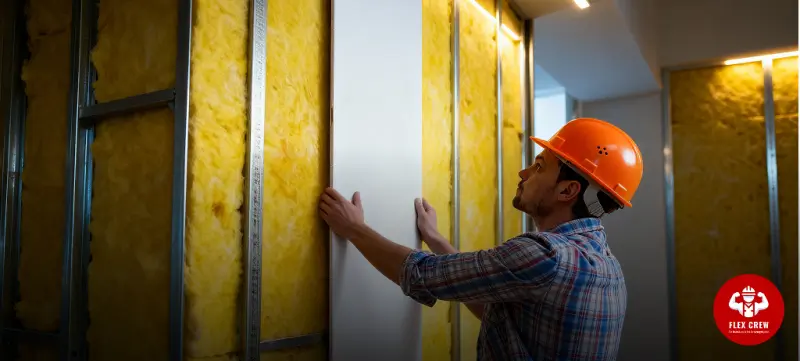
Solving Workforce Challenges Through Strategic Staffing
FlexCrew specializes in connecting construction businesses with qualified skilled tradespeople across Texas, Florida, Georgia, and other active service areas. Rather than spending weeks on traditional hiring processes, contractors can access vetted drywall installers, finishers, and related trades through FlexCrew's staffing solutions.
This approach offers several advantages for managing drywall installation cost. First, it reduces hiring delays that push project timelines and increase overhead expenses. Second, it provides workforce flexibility to scale crews up or down based on project demands. Third, it shifts administrative burdens like payroll, compliance, and benefits management to the staffing partner.
For workers seeking drywall and construction positions, FlexCrew's AI-driven resume builder helps candidates present their skills and experience effectively. This tool streamlines the job placement process, connecting qualified installers with contractors who need reliable crews immediately.
Practical Strategies to Manage Drywall Installation Cost
Smart planning reduces drywall installation cost without sacrificing quality. Start by choosing appropriate finish levels for each space. Level 3 or Level 4 finishes work perfectly for most residential applications. Reserve Level 5 finishes for critical areas with demanding lighting conditions or high-gloss paint requirements.
Select drywall types based on actual needs. Standard drywall handles most interior walls effectively. Use moisture-resistant options only in bathrooms, kitchens, and basements where humidity is a real concern. Fire-rated drywall is often code-required in specific locations like garages, so verify local requirements before upgrading unnecessarily elsewhere.
Schedule projects during slower construction seasons when possible. Fall and winter months often bring more competitive labor rates as contractors seek work during traditionally slower periods. However, in high-growth markets like Austin, Tampa, and Atlanta, strong demand may limit seasonal pricing advantages.
Prepare work areas thoroughly before drywall crews arrive. Clear rooms of furniture and debris. Ensure framing is complete and plumb. Confirm that electrical, plumbing, and HVAC rough-ins are finished and inspected. Well-prepared job sites allow drywall installers to work efficiently, reducing labor hours and controlling costs.
Getting Accurate Drywall Installation Cost Estimates
Request at least three quotes from qualified contractors before committing to any drywall project. Ensure each estimate includes the same scope of work: hanging, taping, mudding, sanding, and the specified finish level. Ask about material costs separately from labor to understand where pricing differences originate.
Be specific about your requirements. Measure wall and ceiling square footage accurately. Note any ceiling heights above standard 8-foot dimensions. Identify areas requiring specialty drywall types. Specify your desired finish level. These details allow contractors to provide accurate quotes rather than padded estimates that cover worst-case scenarios.
For contractors bidding on projects, accurate labor cost projections require understanding local wage rates and workforce availability. FlexCrew's construction staffing expertise helps contractors access current market intelligence on skilled trades hiring across Texas, Florida, and Georgia. This information supports competitive bidding while protecting profit margins.
Move Forward with Confidence
Understanding drywall installation cost empowers contractors and property owners to budget accurately, select appropriate materials, and plan realistic project timelines. In 2026, expect to pay between $1.50 and $3.50 per square foot for standard installations, with regional variations across Texas, Florida, and Georgia markets. Labor represents roughly 70% of total costs, making workforce availability the single most important factor in controlling expenses and maintaining schedules.
FlexCrew helps construction businesses navigate the skilled labor shortage by connecting them with qualified drywall installers, finishers, and related tradespeople. Whether you're managing a single residential project or coordinating multiple commercial developments, reliable workforce access keeps your projects moving forward.
Ready to secure skilled drywall crews for your next project? Visit FlexCrew to connect with qualified construction workers. For job seekers, explore opportunities and use our AI Resume Builder to stand out in today's competitive skilled trades market.