
When a crew goes idle on your job site, the clock doesn't stop. You're still paying wages, covering equipment rental, and watching your margin shrink by the hour. A single idle day for a crew of ten workers, at a fully burdened labor rate of $55 to $75 per hour per person, runs you $4,400 to $6,000 in labor costs alone, with nothing to show for it on the schedule. Multiply that across multiple stoppages on a multi-month project, and you're looking at the kind of loss that turns a profitable bid into a break-even scramble.
What makes this worse is that most of those stoppages were predictable. The industry's downtime problem isn't random bad luck. It's the same chain of failures repeating on project after project. Understanding what causes downtime on construction projects, and recognizing those patterns before they hit your timeline, is one of the most valuable things you can do as a contractor or project manager.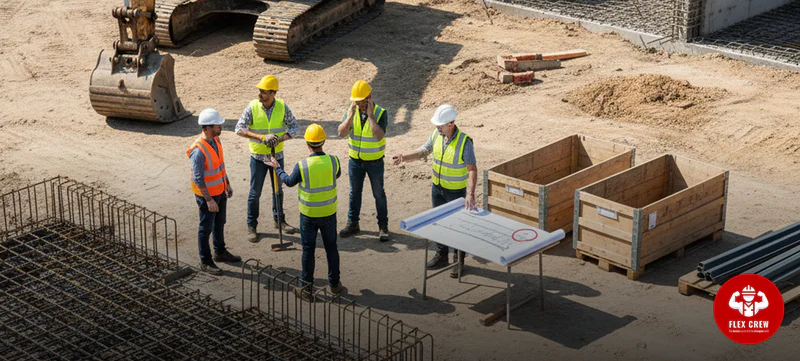
When Your Crew Shows Up and the Work Can't Start
The most expensive version of construction downtime is the one where your people are on the clock and have nowhere to work.
This happens more than most contractors want to admit. A licensed electrician is on site, but the framing trade is two days behind and rough-in can't start. A concrete crew is mobilized, but the inspection hasn't cleared. Your HVAC sub shows up Tuesday ready to hang equipment, but the structural work they need wasn't finished Friday like the schedule said. These aren't equipment failures or supply chain disasters. They're sequencing failures, and they're one of the primary answers to what causes downtime on construction projects at the field level.
The financial hit is immediate. You're paying the crew whether the work moves or not. And if the stoppage pushes that trade into the following week, you may now be competing with their other commitments. Skilled subcontractors in busy markets like Houston, Dallas, or Tampa don't sit around waiting. If your schedule slips, they may move to the next job, and you're back to finding coverage.
What a Quiet Job Site Is Actually Costing You
Before getting into causes, it helps to see what downtime actually costs at the contractor level. These aren't abstract figures, they're the math your project is running every time work stops unexpectedly.
What a Single Downtime Event Costs a Contractor
Labor burden rate (25–45% above base wage) sourced from EstimationPro. These figures reflect direct labor costs only, they don't include equipment rental running, general conditions, or schedule penalty exposure.
These numbers add up fast. A contractor managing multiple trades across a medium-sized commercial build in Florida or Georgia can absorb several events like this per month. By the time the project closes, the cumulative idle time has consumed a large portion of the contingency budget, if there was one.
The One Missing Tradesperson That Stops Everything
The single most common trigger of construction downtime at the contractor level is a missing skilled worker. Not a missing crew, a single licensed tradesperson who didn't show up, quit without notice, or couldn't be sourced in time for the phase that needed them.
This is the structural reality of the current labor market. 94% of construction firms reported difficulty filling open positions in 2024. TheAssociated Builders and Contractors (ABC) projects the industry needs approximately 349,000 net new workers in 2026, beyond normal hiring, just to maintain pace with project demand. That figure rises to 456,000 in 2027.
For contractors operating in Texas, Florida, and Georgia, this shortage is felt sharply. These are high-growth construction markets. Commercial and residential pipelines are full. The competition for licensed electricians, HVAC technicians, welders, and plumbers is intense. When one of these roles goes vacant mid-project, you can't easily backfill it the next morning.
What typically happens instead is the wrong fix: more people to compensate. You pull extra bodies from elsewhere, hoping headcount solves the problem. In practice, it creates new ones. A new worker takes a minimum of seven days to reach full productivity on an unfamiliar job site. During those seven days, you're paying full wages for partial output, and the risk of errors, and the rework that follows, goes up significantly.
How a Single Labor Gap Compounds Into Broader Downtime
This is the cycle that turns a one-day labor gap into a two-week delay. Knowing it exists is the first step to preventing it. For contractors who've been through it, the value of having a reliable construction staffing partner, one that specializes in fast placement of qualified tradespeople across the skilled trades, becomes obvious the hard way.
FlexCrew works specifically with contractors in Texas, Florida, Georgia, and surrounding markets to place electricians, plumbers, HVAC techs, welders, and carpenters quickly and accurately. When a skilled position opens mid-project, having that pipeline already in place means the gap gets filled in days, not weeks.
The Schedule You Approved Is Already Working Against You
Some of the most expensive downtime on your job site was locked in before a single tool was lifted. It was baked into the schedule.
Overloaded CPM schedules, the kind that push maximum work into the shortest possible windows to hit early milestones, create a structural downtime problem. When you assign more concurrent work than the site can realistically execute, you create what's known as high work-in-process.
Trades start competing for space, equipment, and supervisor attention. Workers context-switch constantly. And the schedule that looked aggressive-but-achievable on day one starts slipping by week three.
According to KPMG's research, only 25% of construction projects finish within 10% of their original deadline. That's not primarily a materials problem or a weather problem. That's a planning problem. And for contractors running multiple projects simultaneously, a schedule failure on one job creates ripple effects across your entire operation, crew availability, equipment utilization, cash flow.
The practical fix isn't complicated, but it requires discipline before the project starts. Three-week lookahead planning, where you identify what has to happen at the work package level before a trade mobilizes, is the difference between finding a roadblock three weeks out (when it's solvable) and finding it the morning the crew arrives (when it's expensive). Pre-construction quality meetings before each phase serve the same purpose: they force the conversation that exposes sequencing conflicts before they create idle time.
When the Crew Is Ready and the Materials Aren't
When a crew is ready and materials aren't, you pay for both.
That's the supply chain version of construction downtime, and it's still very much a live issue in 2025. Specialty fabrication lead times, inconsistent delivery windows, and last-mile logistics failures continue to create gaps between crew availability and material readiness, particularly on larger commercial projects in high-demand markets like the Southeast and Texas.
The failure pattern is consistent. A contractor builds a schedule that assumes materials arrive on time. No buffer is built in for fabrication variance. The crew mobilizes. The delivery is three days late. You now have ten workers on the clock with nowhere to work for three days.
Over-ordering to avoid that scenario creates its own problems. Excess inventory floods the job site, materials need to be moved, stored, secured, and tracked. That handling increases the risk of damage. A 2019 inventory control study cited by Milwaukee Tool's construction resource platform found that avoiding non-productive idle time from material management issues could reduce labor costs by 10–12%.
Supply Chain Decisions and Their Downtime Impact for Contractors
Building a one-week material buffer ahead of each work package, combined with tracking fabrication timelines the same way you track trade schedules, eliminates most of these gaps before they become idle days.
The Overtime Trap: When Trying to Recover Makes It Worse
When your project falls behind, the instinct is to push. More hours, more pressure, faster pace. This is understandable. It's also where many contractors turn a manageable delay into a serious one.
Overtime accelerates output on paper. In practice, a fatigued crew makes more errors per hour than a rested one. Those errors lead to rework. Rework leads to inspection resets. And the hours you thought you were gaining get consumed, and then some, by the corrections.
As one construction manager in Pennsylvania described it, his crew burned through their entire overtime budget in three weeks trying to recover time lost to a preventable delay. The project went from profitable to break-even.
Beyond the financial damage, sustained overtime degrades the people doing the work. Communication breaks down under pressure. Decision-making gets rushed. Workers who feel burned out stop flagging problems early, and those unflagged problems become expensive surprises later. By the time morale collapses enough for turnover to start, you're losing experienced tradespeople mid-project. Replacing them restarts the onboarding clock and often triggers another round of the same cycle.
The contractors who avoid this trap aren't necessarily better at reacting to delays. They're better at building float into the schedule from the start, so when something slips, there's room to absorb it without triggering the overtime spiral.
Permits, Inspections, and the Waits You Can't Rush
If you're running projects in Florida, Texas, or Georgia, you already know this one. Permitting offices in fast-growing metros are stretched. A permit that should take two weeks in Austin or Orlando can take six. Inspection queues in active markets create real waits between phases, and those waits don't show up as "construction downtime" on the delay report, but they're paid time with no forward progress.
The sequencing dependency makes this particularly painful. Electrical rough-in can't be covered until it passes inspection. Concrete can't pour until the foundation inspection clears. If your trade sequencing assumes a two-day inspection window and it runs to five days, every downstream trade gets pushed, and every one of those pushed trades has other job commitments.
This is a known variable. Contractors who plan well treat inspection timelines the same way they treat weather: as a real constraint that requires buffer, not a surprise that requires panic. Building that buffer into the original schedule, not hoping for the best and adjusting later, keeps inspection delays from becoming crew idle days.
Most of This Was Visible Before It Happened
The consistent theme across every cause of downtime on construction projects, labor gaps, schedule overloads, supply chain failures, overtime spirals, inspection delays is that most of them were visible before they happened. They showed up in a schedule that didn't have enough float, a material plan that didn't have enough buffer, or a staffing plan that didn't have a reliable fallback.
For contractors building in Texas, Florida, Georgia, or anywhere in FlexCrew's service footprint, having that fallback already in place changes the math on labor gaps entirely. FlexCrew specializes in construction staffing and skilled trades hiring, placing qualified electricians, plumbers, HVAC technicians, welders, and carpenters on projects that need them fast and need them to hit the ground running.
For workers on the job side, FlexCrew's AI-driven resume builder helps skilled tradespeople document their experience and certifications clearly, so the right contractors find them faster, and the gap between available and working shortens on both ends.
Either way, understanding what causes downtime on construction projects is only useful if it changes what you do before the crew goes idle. Close the gaps before they close your margin.