
Construction job sites across America are sitting idle, not for lack of work, but for lack of workers. According to the Associated Builders and Contractors (ABC), the U.S. construction industry needed to attract 439,000 net new workers in 2025 just to meet anticipated demand. A separate AGC and NCCER workforce survey found that 92% of construction firms are struggling to hire qualified workers, with 45% reporting project delays tied directly to labor shortages. That is not a distant industry trend, it is a hiring crisis that is costing contractors real money every week.
Knowing how to hire construction workers fast is no longer optional. For contractors managing projects in Texas, Florida, Georgia, and other high-growth markets, the ability to staff a job site quickly is a competitive advantage, and often the difference between a profitable project and a missed contract.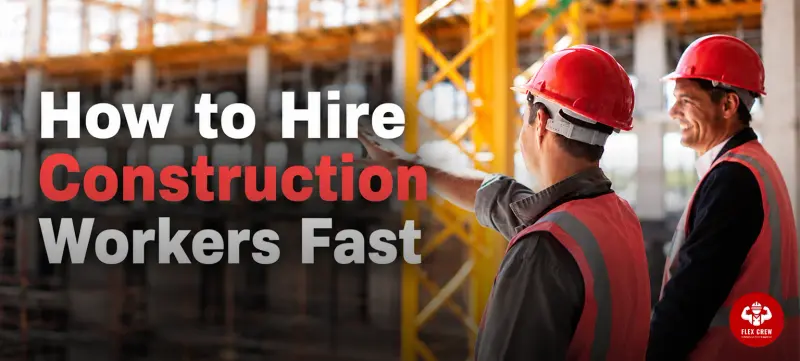
Key Takeaways
The U.S. construction industry faces a shortage of hundreds of thousands of workers annually, with 92% of firms reporting difficulty filling positions.
Traditional job boards are slow and attract low-quality applicants for skilled trade roles. On-demand construction staffing platforms compress hiring timelines from days to hours.
Speed and preparation must work together, showing up unprepared on day one is one of the most common reasons good hires walk away.
Paying at or above local market rate is non-negotiable in high-demand markets like Houston, Orlando, and Atlanta.
Building a preferred worker network over time is the most effective long-term strategy for staying staffed across multiple projects.
Why Skilled Tradespeople Are So Hard to Find Right Now
The numbers from independent sources tell a consistent story. The National Association of Home Builders (NAHB) estimates the construction industry needs approximately 723,000 workers per year to account for both industry growth and attrition. The Bureau of Labor Statistics (BLS) reported average hourly earnings in construction reaching $39.69 per hour in 2025, 8.9% above the U.S. private sector average, a direct result of sustained demand outpacing supply.
Electricians and HVAC technicians are among the hardest roles to fill. BLS occupational projections show electrician employment growing at 9.5% from 2024 to 2034 and HVAC technicians at 8.1%, both well above the national average.
In active construction markets like Houston and Dallas in Texas, or metro Atlanta in Georgia, this plays out every day: skilled tradespeople have multiple offers, and the contractor who posts a vague job listing and waits will almost always lose out to the one who moves decisively.
The table below summarizes the demand picture across the most in-demand construction trades.
Skilled Trades Demand Snapshot (2024–2034 Projections)
Step 1: Define the Role Before You Post Anything
The single most common mistake contractors make when hiring is posting before they know exactly what they need. "Construction worker needed" is not a job description, it is a filter for the wrong applicants.
Before posting a single listing, write down: the trade category (framing, electrical, HVAC, plumbing, concrete, welding), the specific skills required, the project location, the shift schedule, and the pay range. If you are hiring for a commercial project in Houston or a residential building in Orlando, those market-specific details matter, they tell qualified workers whether the opportunity is worth their attention.
If you cannot clearly articulate what the job requires, you are not ready to hire. Clarity at this stage directly determines the quality of your applicant pool at every stage after.
Step 2: Use a Platform Built for Construction Staffing
Generic job boards were built for office roles. The skilled tradespeople you need, electricians, HVAC techs, carpenters, welders are not sitting home browsing Indeed. Most of them are already working, and if they are not, they are fielding multiple offers simultaneously.
On-demand construction staffing platforms like FlexCrewmaintain live pools of vetted, available tradespeople matched to your location and trade requirements. Rather than posting and waiting, you post and choose, often within hours.
Here is how the process actually works on FlexCrew:
Post your job in under five minutes: Select the trade category, required skills, location, budget range, and shift schedule. Your listing is immediately visible to matched workers in your area.
Browse matched candidates before applications arrive: FlexCrew's matching surface workers whose skills, certifications, and availability align with your job, proactively, not reactively.
Send direct invitations for urgent roles: For same-day or next-day needs, you can invite specific workers directly. They receive an immediate notification. Direct invitations consistently produce faster responses than passive postings.
Confirm and go: Accept a candidate and both parties receive full shift details instantly. The worker clocks in from the mobile app on day one.
For employers in metro markets across Texas, Florida, and Georgia, this process compresses a multi-day hiring cycle into hours. That is the practical advantage of a construction-specific staffing platform over a general-purpose temp agency that spreads its attention across five different industries.
Step 3: Verify Before You Commit
Moving fast does not mean moving reckless. One of the most costly mistakes employers make when understaffed and under pressure is hiring based on a phone call and a handshake.
Workers on FlexCrew go through a document verification process before gaining full platform access. The operations team reviews ID and insurance documentation, and verified workers carry a badge on their profile. When you are running a job site in Georgia or Florida where safety, liability, and project outcomes are your responsibility, a verified badge is not just a convenience, it is a risk management decision.
The table below shows what separating verified from unverified hiring looks like in practice.
Verified vs. Unverified Hiring: Key Differences
Step 4: Pay Competitively or Stay Understaffed
There is no clever hiring strategy that overcomes an uncompetitive wage. The BLS reports that construction average hourly earnings reached $39.69 in July 2025, running nearly 9% above the broader private sector. In high-demand markets like Dallas, Miami, and Atlanta, skilled trade wages have been rising steadily for three consecutive years. According to AGC data, 91% of firms increased base pay rates for hourly construction positions in 2024 to combat the shortage.
What this means practically: if your posted rate is $5 below market for electricians or HVAC technicians in your city, you will not attract the workers you want, regardless of how well-written your job description is.
Pay is the foundation. Beyond base wage, performance bonuses, clear advancement paths, and even basic benefits like health insurance differentiate employers in a crowded market. A worker with two similar offers will choose the one with upside. A worker who feels stuck will leave after 90 days. Both outcomes are preventable with a thoughtful compensation structure.
Step 5: Be Prepared on Day One
Contractors consistently underestimate how much day-one preparation matters. Workers who show up and find no equipment ready, no paperwork organized, and no one expecting them disengage immediately, and many do not return for day two.
Before the hire starts, have the basics sorted: safety gear and PPE assigned, a clear first-day schedule, someone responsible for the orientation, and all employment documents ready to sign. FlexCrew handles shift confirmation, clock-in logistics, and payment processing automatically removing significant administrative friction from that first day and ensuring both sides have everything they need before the worker sets foot on site.
A structured 30-60-90 day onboarding plan, even a straightforward one, significantly improves retention. Contractors who invest time in the first 30 days consistently see workers stay longer and perform better. You do not need a formal HR department to build one, you need a written outline of what the worker should know and be capable of at the end of each 30-day block.
Step 6: Build a Preferred Crew Over Time
The contractors who never scramble for workers share one trait: they started building worker relationships before they needed them.
After each completed shift or project on FlexCrew, rating a worker adds them to your preferred results for future postings. Over time, this builds a roster you can reactivate with a single click, the workers you already know, already trust, and already know your site expectations. That turns reactive hiring (scrambling when a project kicks off) into proactive staffing (your crew is ready before the start date).
Supplement this with your trade network. Your supply house contacts, distributor reps, and current crew members often know who is available and who is worth hiring. The best referrals in construction still come from within the trade. Combine that network with the speed and verified worker pool of an on-demand platform and you have a real system, not just a process.
The Real Cost of Slow Hiring
Here is the math most contractors avoid running. If a job site sits idle for three days because you are short two framers and you are billing $8,000 per day, that delay costs $24,000. The total cost of a fast, verified hire through a construction staffing platform is a fraction of that.
Slow hiring does not save money. It spends it on crew overtime, on delayed project milestones, on contracts you could not bid because you were stretched too thin. According to the 2025 AGC/NCCER Workforce Survey, 45% of firms said worker shortages caused delays on at least one project in the past year. That is not a staffing problem. That is a revenue problem.
Shifting the question from "what does this hire cost?" to "what does this delay cost?" is the mindset change that separates understaffed contractors from fully staffed ones.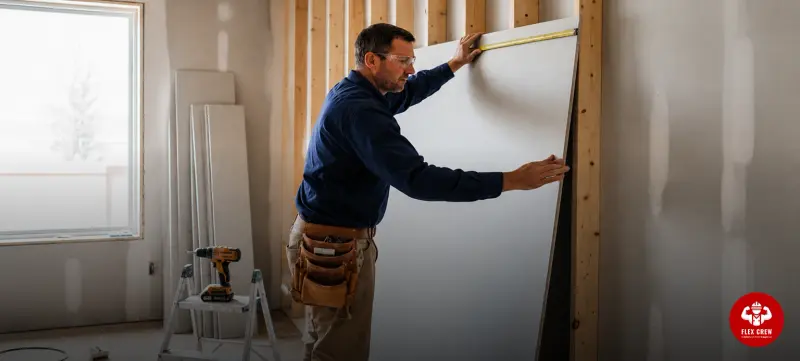
Hiring Construction Workers Fast Across Texas, Florida, Georgia & Beyond
Whether you are managing a commercial build in Houston, a residential development in Orlando, or a light industrial project in Atlanta, the challenge is the same: finding skilled, verified construction workers fast, without sacrificing quality or blowing your labor budget.
FlexCrewwas built specifically for this. Post a construction job in minutes, match with verified tradespeople in your area, and confirm hires the same day. No long agency contracts. No week-long wait for callbacks. Just qualified workers, ready to go.
Workers on FlexCrew also have access to an AI-powered resume builder helping them present their skills and certifications clearly, which means stronger applicant profiles arrive in your feed from the start.
Visit FlexCrew to post your first job and see how fast construction staffing can actually move.