
Someone you hired showed up for three days and disappeared. Or they showed up every day but had no idea what they were doing. Either way, you're now behind schedule, absorbing the cost, and explaining it to someone above you.
That's not a hiring problem. That's a staffing partner problem.
The Associated General Contractors of America found that 92% of hiring firms struggled to find qualified workers, resulting in delays across apartments, factories, and healthcare facilities. The skilled labor shortage is costing the home building sector alone an estimated $10.8 billion per year in higher carrying costs and lost production.
Knowing how to choose a staffing partner for construction is the difference between a project that runs and one that quietly unravels. This blog breaks down exactly what to look for, and what to walk away from.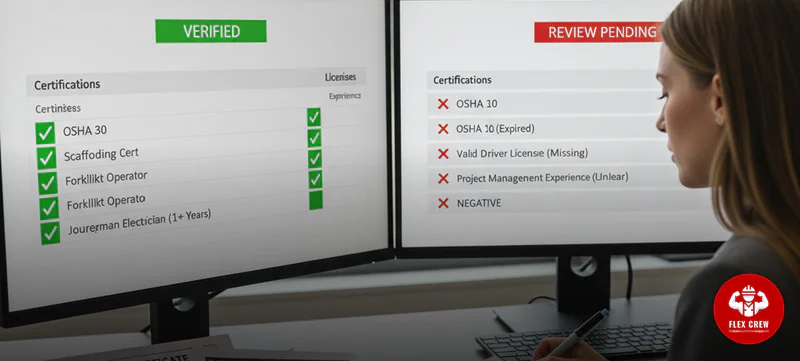
Key Takeaways
Trade specialization matters more than general staffing experience
Candidate screening quality determines job-site performance, not resume length
Regional market knowledge is non-negotiable in high-demand states like Texas, Florida, and Georgia
Responsiveness and accountability after placement separate real partners from order-fillers
Cost transparency protects your margins, vague pricing structures usually hide surprises
A good staffing partner invests in workers too, that's how they attract better talent
1. Trade Specialization Beats General Staffing Experience Every Time
There's a real difference between a staffing firm that fills seats and one that understands what happens on an active job site. A generalist agency might place warehouse workers or admin staff just fine. Construction is an entirely different world, one where a wrong placement doesn't just slow things down, it creates genuine safety risk and real financial exposure.
Ask any agency you're evaluating directly: "What trades do you place most often?" A firm that operates in skilled trades should answer without hesitating, electrical, plumbing, HVAC, welding, carpentry. Shortages are especially severe in licensed and highly skilled trades because licensing requirements and multi-year training periods create structural constraints that a generalist agency won't understand or navigate well.
If they stumble on that question, they're not your partner, they're a general recruiter calling construction companies this quarter.
What "Construction Experience" Actually Looks Like in a Staffing Firm
It's not just about knowing trade names. A staffing partner with real construction depth understands the difference between an apprentice and a journeyman, and why putting the wrong one on a specific project phase creates problems downstream. They know OSHA expectations aren't a checkbox. They understand that a licensed master plumber in Texas operates under different certification requirements than one in Georgia.
That depth shows up in how they ask questions during your first call. A trade-aware agency asks about project type, work phase, crew composition, and required certifications before they start sourcing. A generalist asks how many people you need and when. That gap in curiosity is the gap in quality you'll feel the moment their candidate arrives.
2. Their Screening Process Either Protects You or Exposes You
Posting a role on Indeed and forwarding the first three resumes is not a screening process. It's a lottery. And in construction, losing that lottery means someone shows up on a live electrical panel or gas line without the skills to be there safely, and without the documentation to prove otherwise if something goes wrong.
A credible staffing partner describes their vetting process in specific terms, background checks, drug testing, work authorization verification, trade-specific competency reviews, and reference checks. Vague answers here aren't just unhelpful. They're a signal about every other part of how they operate.
57% of construction firms report that available candidates are not qualified because they lack essential skills or don't hold an appropriate license. That failure is happening before workers reach the job site. Your staffing partner is the last filter before that person lands on your crew, or on your liability.
The Screening Questions Worth Asking Before You Commit
Do you verify trade certifications independently, or do you take the candidate's word for it?
What does your drug testing protocol look like, pre-placement only, or ongoing?
How do you assess competency for a skilled trade role beyond reviewing a resume?
Have you placed workers on projects similar to mine in the last 90 days?
A strong staffing partner answers all four without hesitation. Hedging on any of them tells you exactly what their placements will look like.
3. Local Market Knowledge Is Non-Negotiable

An agency that dominates markets in the Pacific Northwest has zero meaningful insight into labor dynamics in Dallas or Tampa. Wage norms, union vs. non-union composition, commute patterns, and candidate availability are all market-specific. A staffing partner without active relationships in your specific market is learning on your time and your budget.
Why "We're National" Doesn't Always Mean What You Think
National reach sounds like a selling point until you ask which markets they've actively placed workers in this quarter. Some national agencies maintain a single recruiter covering three states from a home office, sourcing entirely through job boards with no real candidate relationships. That's not market coverage, that's geography on a website.
In high-growth construction markets like Houston, Atlanta, or Miami, the difference between an agency with genuine local roots and one pretending to have them shows up fast. Ask for specific placement history by city, not a list of states where they're technically licensed to operate.
4. Responsiveness Tells You Everything Before You Need It
Construction doesn't move on a polite hiring timeline. A key worker is suddenly unavailable. Scope expands with two weeks' notice. A subcontractor no-shows Wednesday morning. Your staffing partner's response time in those moments determines whether the project stays on track or stalls, and whether you're the one absorbing the fallout.
Test this before you're in a bind. How long does it take them to return a call? Do you get a dedicated contact or a general inbox? Can they give you a realistic timeline for filling a skilled role in your specific market?
Any agency promising same-day certified electricians is overselling. Honest timelines are actually a sign of quality, it means they're not going to rush you to an unqualified body just to close the order.
5. How They Handle a Bad Placement Reveals Who They Really Are
Even the most rigorous screening produces the occasional misfit. What separates a true partner from a transactional vendor is what happens the moment you flag a problem, not how they pitch themselves before you've signed anything.
Before committing, get clear answers: How quickly can they replace a placement that isn't working? Who do you call when there's a performance or attendance issue? What accountability do they take when a worker doesn't perform to the standards they were vetted against?
The Replacement Conversation You Should Have Before Day One
Most people make the mistake of never asking about replacements until they actually need one, which is the worst time to learn the process is slow, unclear, or requires you to document the failure before anything moves.
A good staffing partner has a defined replacement protocol they'll walk you through upfront without being asked. They'll tell you the timeframe, the point of contact, and what constitutes grounds for a swap. If they can't describe that process clearly before you've placed a single order, expect the same vagueness when something goes wrong on a Thursday morning.
6. Partner Mindset vs. Vendor Mentality: Know the Difference
A vendor fills your order and moves on. A partner asks about your projects, your environment, your timeline pressures, and the kind of person who actually performs well in your specific context. That distinction sounds soft until you've dealt with a vendor who sent you technically qualified workers who created friction the moment they arrived.
45% of construction firms report experiencing project delays caused by worker shortages, and 78% report at least one delayed project in the past twelve months. A significant portion of that pain comes not from the shortage itself, but from staffing relationships that prioritize speed over fit, leaving the cost of a bad placement with you.
A vendor wants to know your headcount and your start date. A partner wants to know what a successful hire actually looks like on your specific job site, before they touch a single candidate profile.
7. Pricing Transparency Protects Your Margins
Construction staffing typically runs on a markup model, the agency adds a percentage above the worker's hourly rate covering employer taxes, workers' comp, insurance, and their margin. In skilled trades markets, that markup generally runs between 40% and 65% depending on trade, experience level, and region.
A lower markup that excludes workers' comp or drug testing looks cheaper on paper but creates real financial and compliance exposure. A transparent agency walks you through their fee structure without hesitation. If they're reluctant to explain what you're actually paying for, that same opacity will show up everywhere else.
8. How a Staffing Agency Treats Workers Directly Affects the Quality of Your Placements
The way an agency treats its workers determines the quality of the talent pool they can access. Agencies that cut corners on worker support see high turnover in their own candidate base. The trades community in cities like Dallas, Atlanta, or Tampa is smaller than it looks. Workers talk. Agencies that don't invest in their people end up with the candidates nobody else wanted.
The best agencies support both sides of the placement equation. Tools like FlexCrew's AI-powered Resume Builder help tradespeople present their skills accurately, which means better-matched candidate profiles from the start, and fewer surprises when someone arrives. An agency that invests in its workers' success attracts stronger candidates, which ultimately means better placements for everyone they serve.
The Bottom Line
Bad staffing placements don't just hurt morale, they delay projects, inflate costs, and put you in a difficult position with the people counting on you to keep things moving. Knowing how to choose a staffing partner for construction comes down to one question: are they genuinely invested in your outcome, or are they just moving resumes?
The right partner knows your trades, vets candidates rigorously, communicates honestly about timelines and costs, and stands behind every placement they make. FlexCrew operates across Texas, Florida, Georgia, and other high-demand construction markets, connecting you with job-site-ready skilled trades professionals without the guesswork.
Ready to hire smarter? Visit flexcrewusa.com today.