
Getting a fabrication quote back and having no idea if it's fair is a frustrating position to be in. Contractors, homeowners, and business owners across Texas, Florida, and Georgia ask the same question every day: how much do fabricators charge, and why do two shops quote such different numbers for the same part?
FlexCrew works with construction firms and skilled trades employers throughout these markets, so we see fabrication pricing and staffing from both sides of the table. This guide breaks the math down piece by piece, using real labor data and real cost examples.
Fabrication pricing isn't a guessing game. It's built from labor time, material cost, drafting fees, and markup. Once you see the formula, the final invoice makes a lot more sense.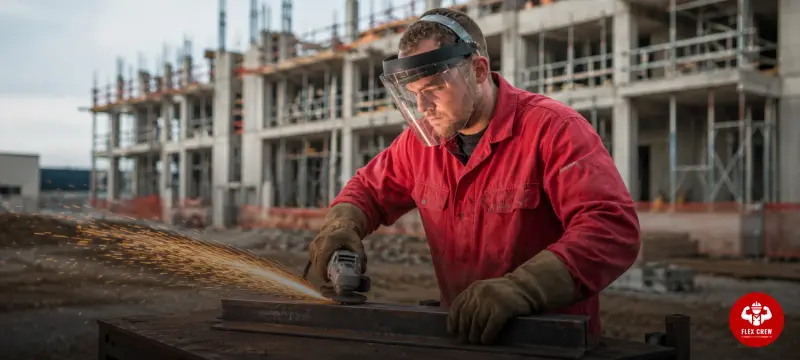
Key Takeaways
Skilled welders and fabricators earn a national median wage of about $51,000 per year, or roughly $24.50 an hour.
Shop hourly labor rates typically run $75 to $150, since shops bill for overhead, equipment, and skill, not just wages.
Material costs are priced per square inch or square foot, then marked up 30% to 50%.
Drafting is often a flat fee, usually $50 to $80 for small parts.
Regional demand for welders and fabricators in Texas, Florida, and Georgia shapes local fabrication shop hourly rate ranges.
How Much Do Fabricators Charge Per Hour?
Most shops bill labor by the hour, and the spread is wider than people expect. Small independent fabricators often charge $75 to $100 per hour. Larger commercial shops running CNC plasma tables or fiber lasers can charge $140 to $250 per hour.
That hourly number rarely covers just welding. It usually bundles drafting, cutting, prepping, welding, and cleanup into one job. A single small bracket can pass through five separate labor steps before it ships.
Equipment cost is baked into the rate too. A manual shear and brake cost far less to run than a multi-axis CNC center. That difference alone can explain why one quote reads $100 an hour and another reads $220.
Cost Anatomy of a Small Fabricated Part
Here's a real infographic-style breakdown of what actually goes into pricing a single small welded bracket, based on documented shop labor times.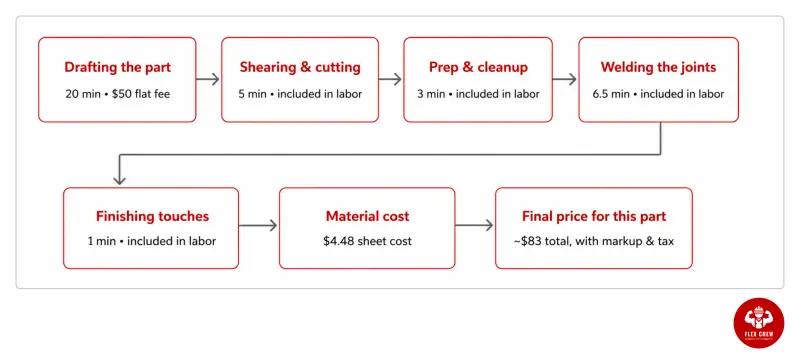
This example shows why how much do fabricators charge can vary so much between a five-minute part and a five-hour assembly. Small jobs still carry real labor costs, even when material is cheap.
How Much Do Fabricators Charge Per Square Foot?
For sheet metal, paneling, and structural flat stock, pricing per square foot is common. Rates generally fall between $5 and $25 per square foot, depending on material and thickness.
Aluminum typically costs less per square foot than stainless steel. Thicker gauge material, tight tolerances, and multiple bends push the number higher. A flat, unbent panel will always be priced lower than one requiring welds and finishing.
If you're asking how much do fabricators charge per square foot for a custom design, get a quote based on your actual drawings. Online averages rarely match a final invoice once tolerances are added.
Fabrication Cost Meaning: What's Actually Being Billed
The phrase "fabrication cost" covers more than metal cutting. It typically includes drafting time, raw material, cutting, welding, finishing, and markup. That full breakdown is the real answer to how much do fabricators charge.
Material pricing works on a simple formula. A shop takes the price paid for a full sheet, divides it by total square inches, and multiplies by the square inches actually used. A $230 sheet of 4x10 aluminum, for example, works out to roughly 4 cents per square inch before markup.
Markup is then added, typically 35% to 50%, with smaller markups reserved for larger orders. Sales tax often applies to the finished part, even in states where labor itself isn't taxed.
Metal Fabrication Cost Per Hour: Why It Varies So Much
Metal fabrication cost per hour depends heavily on the process. Manual cutting and welding on a shear or brake costs less per hour than programming a CNC plasma table. Specialized certifications, like structural or pressure vessel welding through the American Welding Society, raise the rate further.
Volume changes the math too. A one-off custom part costs more per hour than the same part built in batches of 100, since setup time gets spread across the run.
Skilled labor availability plays a direct role. The Bureau of Labor Statistics reports welders, cutters, solderers, and brazers held about 457,300 jobs nationwide in 2024, with roughly 45,600 openings projected each year as workers retire or change fields. Tighter labor supply in fast-growing metros tends to push shop rates up.
Fabrication Shop Hourly Rate: National Wage Data
Understanding what fabricators actually earn helps explain what shops charge. Labor is the largest line item in most quotes, so wage data gives a grounded starting point.
These figures reflect the median annual wage for welders, cutters, solderers, and brazers, which was $51,000 in May 2024, with the lowest 10 percent earning less than $38,130 and the highest 10 percent earning more than $75,850. Shop billing rates run well above take-home wages, since they also cover overhead, insurance, equipment depreciation, and profit margin.
A fabrication shop hourly rate isn't uniform across regions either. Metro hubs like Houston, Dallas, Miami, Tampa, and Atlanta typically see higher shop rates than smaller markets, driven by stronger demand for certified welders and fabricators. Sales tax rates also shift the final invoice from state to state, even when labor and material costs match.
What Goes Into a Fair Fabrication Quote
A trustworthy quote separates labor, material, and markup instead of bundling everything into one vague total. Ask a shop how much do fabricators charge for your specific job, and a reputable shop can walk through each line item.
Welding is often priced by total weld length, sometimes doubled if both sides of a joint need reinforcement for strength. Drafting is billed as a flat fee for small jobs or hourly for larger assemblies. Material markup typically sits at 35% to 50%, adjusted down for bulk orders.
Shops that guess, like charging a flat dollar amount per inch of weld regardless of complexity, end up over- or underpricing jobs. Shops that track real minutes and real material usage price more consistently and stay competitive over time.
How Staffing Affects Fabrication Pricing
Labor is the single biggest driver behind how much do fabricators charge, and labor cost is tied directly to workforce reliability. A shop with steady, experienced welders and fabricators moves faster and prices more predictably than one constantly retraining new hires.
This is where staffing decisions matter for construction and manufacturing businesses across Texas, Florida, and Georgia. FlexCrew connects employers with vetted welders, fabricators, and light industrial workers, helping shops maintain production without inflating rates to cover turnover.
Contractors building out a project team benefit from a staffing partner familiar with skilled trades, including welding, electrical, HVAC, plumbing, and carpentry. Faster, more reliable staffing tends to keep fabrication quotes stable instead of rising to offset delays.
For Workers: Turning Fabrication Rates Into Fair Pay
If you're a welder or fabricator, understanding shop pricing helps you negotiate fair wages. Shops billing $100 to $150 per hour for labor can typically support solid, above-median pay for skilled tradespeople.
A resume that clearly shows certifications, machine experience, and project history helps workers land better-paying fabrication roles. FlexCrew's AI Resume Builder helps welders and fabricators put together a resume that highlights real, verifiable experience quickly.
For job seekers across Texas, Florida, Georgia, and other active FlexCrew markets, a polished resume makes it easier to move into higher-paying shops or larger commercial projects.
Common Pricing Mistakes to Avoid
Some shops price by rough guesswork instead of real calculation. Charging a flat rate per weld inch without accounting for material or setup time works for tiny jobs but breaks down on larger ones.
Simply doubling material cost without checking real markup benchmarks is another shortcut that misfires. It can overcharge on some jobs and undercharge on others, depending on material and job size.
The more reliable approach tracks real labor minutes, real material usage, and a consistent markup percentage. That keeps quotes accurate whether the job is a small bracket or a large structural order.
Final Thoughts: Getting a Fair Fabrication Quote
So, how much do fabricators charge in the end? It depends on labor time, material cost, drafting, markup, and regional wage trends. A small part might run under $100, while larger structural jobs can run into the thousands.
Understanding this breakdown helps you evaluate quotes with confidence, whether you're sourcing parts or setting your own shop pricing. And if your business depends on skilled welders, fabricators, or light industrial workers to keep production moving, FlexCrew can help you find reliable talent across Texas, Florida, Georgia, and other active markets.
Ready to build a stronger fabrication crew or find your next skilled trades role? Visit FlexCrew to connect with employers and workers who understand what fair fabrication pricing looks like.