
Construction Project Management: The Complete Guide for 2026
You're not alone. Seven out of every ten projects run over budget and miss deadlines. The culprit isn't lazy workers or bad weather it's poor systems and missing skills.
Construction project management is the difference between a project that makes money and one that bleeds it. Whether you're running a commercial build in Texas or a residential renovation in Florida, this guide breaks down everything you need to know about managing construction projects the right way.
What Is Construction Project Management?
Construction project management is the process of planning, coordinating, and overseeing a construction project from start to finish. It covers everything from estimating costs and creating schedules to managing teams, controlling budgets, and ensuring safety compliance.
Unlike general project management, construction project managementdeals with unique challenges: weather delays, material shortages, subcontractor coordination, safety regulations, and the physical reality that mistakes can't just be deleted they require demolition and rebuilding.
The goal is simple: complete the project scope on time, under budget, and to the required quality standards without anyone getting hurt.
What Does a Construction Project Manager Do?
A construction project manager wears many hats. On any given day, they might transition from the drafting table to the lumber yard to the job site, working with architects, vendors, electricians, carpenters, plumbers, and roofers.
Core responsibilities include:
Preparing cost estimates, budgets, and work schedules
Interpreting contracts and technical information
Reporting progress and budget status to clients and stakeholders
Collaborating with architects, engineers, and construction specialists
Selecting and coordinating subcontractors
Responding to delays, emergencies, and unexpected problems
Ensuring compliance with building codes and safety regulations
The best construction project managers bring a calm, collected approach to problem-solving. They listen to their teams, stay organized, and know how to prioritize what's urgent versus what can wait.
The 6 Essential Construction Project Management Skills
Construction management isn't magic it's a set of practical, repeatable skills. Here's what separates successful project managers from those who struggle:
1. Estimating
Profit on construction projects is set before anyone breaks ground. If you can't price projects accurately, you lose money before you start. Estimating covers direct costs (labor, materials, equipment) and indirect costs (supervision, site facilities, utilities).
2. Scheduling
Time is money in construction. A good schedule controls costs, manages contracts, and ensures you finish on time. The critical path method helps identify which tasks must stay on track to avoid delays.
3. Contract Management
Contracts are the backbone of any construction project. You'll have agreements with clients, subcontractors, and suppliers. Understanding payment terms, scope definitions, and variation processes keeps money flowing and disputes at bay.
4. Risk Management
Construction projects are unpredictable. Weather changes, ground conditions surprise you, and subcontractors go bankrupt. Risk management means identifying what could go wrong and having plans ready before problems hit.
5. Quality Control
Rework and defects kill profit margins and delay handover. Building it right the first time requires clear standards, regular inspections, and documented processes.
6. Cost Control
Plans mean nothing if they don't match reality. Tracking actual costs against budgets and taking corrective action when variances appear keeps projects profitable.
The Construction Project Management Process: Step by Step
Every construction project follows a predictable lifecycle. Understanding each phase helps you anticipate challenges and prepare solutions.
Phase 1: Securing the Contract
Before any building happens, you need to win work at the right price.
Step 1: Review and Understand Scope Study drawings, specifications, and schedules until you can build the job in your head. Identify contradictions and generate questions for the client.
Step 2: Prepare Your Response Define your price, timeline, and terms. What's included? What's excluded? What assumptions are you making? Be specific ambiguity will cost you later.
Step 3: Submit Your Offer Package your price, program, and terms clearly. Detail your inclusions and exclusions. Never just send a number without context.
Step 4: Negotiate and Finalize Clarify expectations, agree on terms, and sign the contract. Now you're ready to spend money and deliver.
Phase 2: Delivering the Project
With contract signed, execution begins.
Step 1: Plan and Mobilize Convert your tender estimate into a working budget. Develop detailed schedules, set up cost tracking systems, order materials, engage subcontractors, and finalize designs.
Step 2: Execute the Plan Daily site management begins. Sequence work, hold progress meetings, manage safety protocols, conduct QA inspections, and communicate with all stakeholders.
Step 3: Monitor and Control Track costs, measure quantities, compare progress to plan, and maintain registers for RFIs, defects, delays, and quality records. Ask constantly: are we sticking to the plan?
Step 4: Manage the Contract Submit progress claims, process variations, issue delay notices, and maintain detailed records. Getting paid is different from doing the work.
Step 5: Manage Change Change is inevitable. Whether from planning gaps or unforeseen circumstances, update schedules, budgets, and plans while managing the commercial impact.
Step 6: Complete and Close Out Finish inspections, rectify defects, conduct handover walkthroughs, prepare documentation, and close out final accounts. Fulfill all obligations and provide evidence.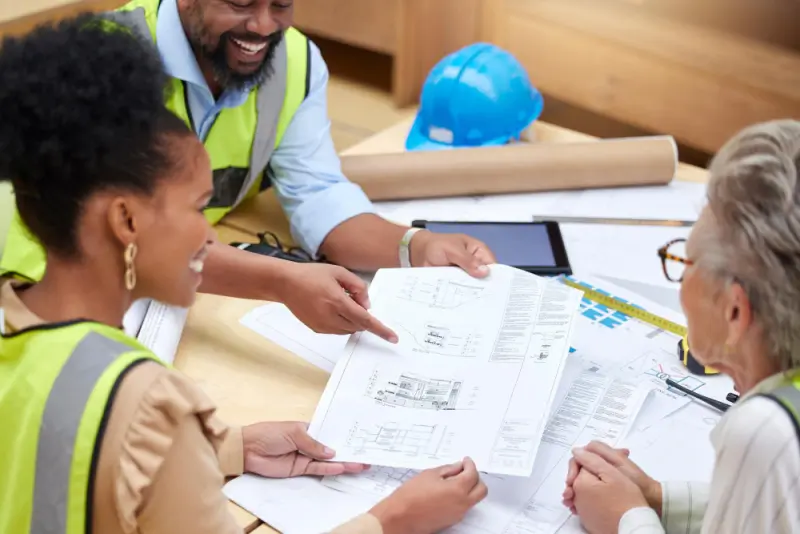
Construction Project Management: Building Your Team
Successful construction projects require the right people in the right roles.
Project Owner: Commissions and finances the project. Makes high-level decisions about contractors and delivery methods.
Construction Project Manager: Plans, coordinates, budgets, and supervises the project. The central point of communication for all stakeholders.
General Contractor: Oversees daily operations on the job site. Provides equipment, materials, and labor. Manages subcontractors.
Subcontractors: Specialists in specific trades—electrical, plumbing, carpentry, HVAC, roofing. Execute work outside the general contractor's expertise.
Finding Skilled Workers for Your Construction Project
Here's the hard truth: the construction industry needs to attract about 546,000 new workers to meet current demand. Finding qualified, reliable workers is one of the biggest challenges facing construction project managers today.
Traditional hiring takes too long. Posting job ads and sifting through unqualified resumes doesn't work when you need 15 electricians next week.
That's where FlexCrew USA comes in. Our platform connects construction companies with pre-vetted skilled workers fast often within 24-48 hours. Whether you need general laborers, carpenters, welders, electricians, or equipment operators, our network of 5,000+ hourly workers has you covered.
Why construction companies choose FlexCrew:
Every worker goes through a rigorous vetting process
93% of businesses want their workers back
2% no-show rate (industry leading)
See worker profiles and experience instantly
Flexible scheduling scale up or down as projects require
Coverage across major U.S. cities
Stop scrambling to fill positions. Post your job on FlexCrew and get matched with qualified professionals ready to work.
How to Become a Construction Project Manager
Interested in a construction project management career? Here's how to get started:
Education: Many firms prefer candidates with a bachelor's degree in construction management, civil engineering, or a related field. However, hands-on experience matters just as much.
Experience: Start on job sites as a laborer or tradesperson. Work your way up through project engineer or assistant PM roles. Understanding how buildings actually get built is invaluable.
Certifications: The Certified Construction Manager (CCM) credential from the Construction Management Association of America validates your expertise. The Project Management Professional (PMP) certification from PMI is also valuable.
Salary: Construction project managers earn a median salary of approximately $112,000 annually. Job growth is projected at 8% through 2031—higher than the national average.
Pro tip for job seekers: Your resume needs to stand out. FlexCrew's AI Resume Builder helps construction professionals create polished, professional resumes that highlight relevant experience and skills. Build your resume today and land your next construction PM role faster.
Common Challenges in Construction Project Management
Even experienced project managers face these recurring obstacles:
Labor shortages: The skilled trades gap continues to widen as older workers retire and fewer young people enter the trades.
Scope creep: Clients request additional work without understanding the cost and schedule impact. Manage this through clear change order processes.
Communication breakdowns: Multiple teams, subcontractors, and stakeholders mean information gets lost. Document everything and over-communicate.
Weather delays: Rain, extreme temperatures, and seasonal changes affect productivity. Build contingency into your schedules.
Material price volatility: Lumber, steel, and copper prices fluctuate. Lock in prices when possible and build escalation clauses into contracts.
Safety incidents: Construction is inherently dangerous. Maintain PPE requirements, conduct regular safety meetings, and never cut corners on compliance.
Ready to Build Your Next Project?
Construction project management separates successful builds from budget disasters. Master the fundamentals—estimating, scheduling, contracts, risk management, quality, and cost control—and you'll deliver projects that make money instead of losing it.
Need skilled workers for your next project? FlexCrew USA connects you with vetted construction professionals ready to work. Post your job today and see why 93% of businesses come back for more.
Looking for construction work? Create your profile, showcase your skills, and get matched with jobs that fit your experience. Our AI Resume Builder helps you stand out to employers across the country.

FAQ: Construction Project Management
What is construction project management?
Construction project management is the practice of planning, organizing, and overseeing construction projects from conception to completion. It includes budgeting, scheduling, quality control, safety management, and stakeholder communication.
What skills do construction project managers need?
Key skills include estimating, scheduling, contract management, risk management, quality control, and cost tracking. Soft skills like communication, leadership, problem-solving, and adaptability are equally important.
How much do construction project managers make in the U.S.?
The median salary for construction project managers is approximately $112,000 per year. Salaries vary based on location, experience, and project complexity. Major markets like California, Texas, and New York typically pay higher rates.
How do I become a construction project manager with no experience?
Start with entry-level construction roles to learn the industry. Pursue a degree in construction management or civil engineering. Gain certifications like the CCM or PMP. Work your way up through project engineer or assistant PM positions.
What's the difference between a construction manager and a project manager?
Construction managers focus specifically on the construction phase—supervising on-site work, managing trades, and ensuring quality. Project managers may oversee the entire development process, including pre-construction planning and stakeholder coordination.
How do I find skilled construction workers fast?
Use a construction staffing platform like FlexCrew USA to connect with pre-vetted workers in 24-48 hours. Our platform offers flexible scheduling, transparent pricing, and access to skilled trades professionals across the country.
What certifications should construction project managers have?
The Certified Construction Manager (CCM) from CMAA and Project Management Professional (PMP) from PMI are the most recognized credentials. OSHA certifications and trade-specific credentials also add value.
What software do construction project managers use?
Common tools include scheduling software (Primavera, Microsoft Project), estimating tools, cost tracking systems, and collaboration platforms. Many teams also use mobile apps for daily reports and communication.