Construction companies across Texas, Florida, Georgia, and beyond face the same frustrating challenge: open positions that stay open for weeks, sometimes months. The hardest roles to fill in construction aren't just inconvenient vacancies.
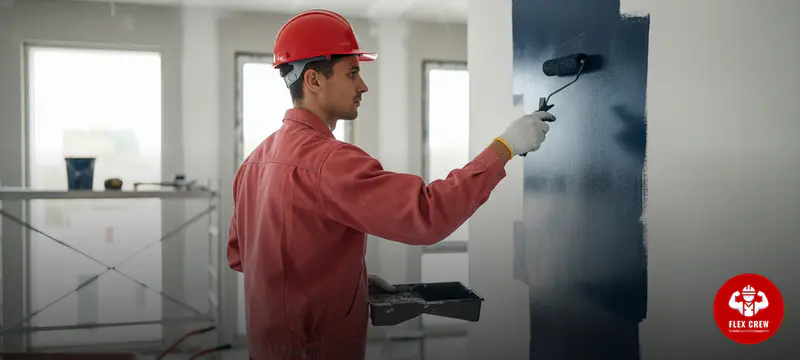
Hardest Roles to Fill in Construction: Smart Solutions for Critical Shortages
They're project delays, budget overruns, and lost contracts. FlexCrew understands this reality because we work directly with contractors, developers, and construction firms navigating these shortages every day. We specialize in connecting businesses with skilled tradespeople who can step onto a jobsite and deliver immediately.
The construction labor shortage isn't new, but it's getting worse. Experienced workers retire faster than new ones enter the field. Younger workers choose college over trade schools. Immigration patterns shift. Infrastructure spending increases demand without increasing supply. The result? Certain roles become nearly impossible to fill, and companies scramble to keep projects on schedule.
This isn't about abstract labor statistics. It's about concrete finishers who can't find helpers, electrical contractors bidding jobs they can't staff, and HVAC companies turning down work because they lack technicians.
Why Construction Roles Stay Open Longer Than Other Industries
Construction hiring operates differently than office recruitment. A bad hire on a jobsite creates safety risks, quality problems, and team friction. Most construction roles require hands-on skills you can't teach in a week.
Key challenges that keep positions unfilled:
- Physical demands eliminate 60-70% of potential candidates immediately
- Multi-year apprenticeships create barriers most young workers won't cross
- Seasonal fluctuations force workers to choose more stable industries
- Aging workforce retires faster than replacements enter the field
- Licensing requirements take years and significant financial investment
Seasonal demand complicates staffing further. Summer brings peak construction activity across Florida and Texas, creating fierce competition for skilled workers. Winter weather slows projects in some regions but not others, forcing workers to relocate or accept layoffs.
Pay expectations create mismatches between what companies offer and what workers demand. Skilled electricians and plumbers know their market value. They won't accept outdated wage structures when competitors pay better or offer superior benefits.
The Top Five Hardest Roles to Fill in Construction
Concrete Workers and Finishers
Concrete work ranks among the most physically punishing construction jobs. Workers spend entire shifts bent over, smoothing and leveling surfaces before material hardens. Time pressure is constant. Once concrete starts setting, there's no pause button.
Why concrete positions stay empty:
- Constant bending and kneeling destroys backs and knees within years
- Work must be completed before material hardens, creating intense pressure
- Extreme heat in Texas and Florida makes already brutal work unbearable
- Silica dust exposure causes serious long-term respiratory problems
- New workers quit within weeks due to physical demands
The hardest roles to fill in construction often involve concrete because the work combines brutal physical demands with unforgiving deadlines. Finishing requires feel and experience you can't learn from videos. New workers struggle with timing, pressure, and maintaining quality under stress.
Concrete crews face a specific problem: the job physically breaks down workers faster than almost any other trade. Survey data shows most concrete finishers experience chronic back pain by their mid-thirties. Many leave the field entirely before reaching forty.
FlexCrew connects construction firms with concrete workers who understand the demands and possess the skills to deliver quality work. Our screening process identifies candidates with proven experience, not just resumes claiming competence.
Skilled Electricians
Electrical work requires extensive training, licensing, and ongoing education. Apprenticeships last four to five years. Licensing exams test detailed code knowledge. Continuing education requirements ensure electricians stay current with evolving standards.
What makes electrical positions so difficult to fill:
- 4-5 year apprenticeships before becoming journeyman electricians
- State licensing exams with failure rates exceeding 40%
- Continuous education requirements to maintain certifications
- High demand across residential, commercial, and industrial sectors
- Fewer young people entering apprenticeship programs
Demand for electricians outpaces supply across every construction market. Commercial projects need electricians for complex systems. Residential developments require them for every home. Industrial facilities depend on them for specialized installations and maintenance. Solar installations, EV charging infrastructure, and smart building systems create entirely new demand streams.
According to industry surveys, 79% of contractors report difficulty finding qualified electricians. This percentage has increased every year since 2019. Companies in Georgia, Florida, and Texas compete for the same limited pool of licensed electricians.
FlexCrew maintains networks of qualified electricians actively seeking work, shortening the hiring timeline from months to days.

Plumbers and Pipefitters
Plumbing combines technical knowledge with difficult working conditions. Plumbers crawl through tight spaces, work in extreme temperatures, and handle unpleasant materials. The work demands problem-solving skills, code knowledge, and physical stamina.
Critical factors creating plumber shortages:
- Multi-year apprenticeships required before licensing
- Physically demanding work in confined, uncomfortable spaces
- Complex code requirements that change by jurisdiction
- High responsibility for system safety and functionality
- Strong wages offset by challenging working conditions
Pipefitters face similar challenges on larger scales. Industrial projects require precise pipe installation for systems operating under high pressure or extreme temperatures. Mistakes create safety hazards, environmental violations, and expensive failures.
Both roles require multi-year apprenticeships and licensing. Both offer strong wages but demand hard work in challenging environments. Both stay perpetually understaffed because qualified candidates are scarce and demand stays high.
Construction firms across FlexCrew's service regions report plumbing and pipefitting as perpetual hiring challenges. These positions stay open longest and prove hardest to fill with qualified candidates.
Welders and Fabricators
Welding appears simple until you try it. Creating strong, clean welds requires hand-eye coordination, steady control, and understanding how different metals behave under heat. Quality welding separates safe structures from dangerous failures.
Why qualified welders are so scarce:
- Specialized certifications required for different welding types
- Years of practice needed to master various welding techniques
- Physical demands include heat exposure and awkward positions
- Testing and recertification requirements create ongoing barriers
- High demand across energy, infrastructure, and manufacturing sectors
Industrial construction, pipeline work, and structural steel projects all depend on skilled welders. Texas energy sector projects create constant demand. Florida infrastructure work needs welders for bridges, port facilities, and commercial construction. Georgia manufacturing and distribution centers require fabrication expertise.
Certification requirements vary by industry and application. Underwater welding, aerospace welding, and pipeline welding each demand specialized training and testing. Even general construction welding requires certifications that take time and money to obtain.
FlexCrew's network includes welders across multiple specializations, helping businesses fill positions quickly without sacrificing quality standards.
Project Managers and Superintendents
Leadership positions in construction combine technical knowledge with people management, schedule coordination, and budget oversight. These represent some of the hardest roles to fill in construction because they require a rare combination of skills.
What makes construction leadership so difficult to staff:
- Requires 10+ years of field experience before capable leadership
- Must understand all trades, not just one specialty
- Combines technical knowledge with people management skills
- Experienced candidates often start their own companies
- High stress levels and long hours reduce candidate pool
Project managers need construction experience, communication skills, and organizational abilities. Superintendents must understand every trade, manage subcontractors, and keep projects moving despite constant obstacles.
You can't promote someone from an office job into construction leadership. They need to understand how buildings get built, what can go wrong, and how different trades interact. This experience requirement takes years to develop and can't be shortcut.
Survey data shows over 81% of construction firms struggle to fill project management and superintendent positions. These vacancies directly impact project success because leadership quality determines whether jobs finish on time, on budget, and to specification.

hardest role in const
Why Traditional Hiring Methods Fail for These Roles
Posting jobs on general employment websites generates applications but rarely produces qualified hires. Construction roles require specific skills, certifications, and experience that can't be verified through resumes alone.
The Problems with Standard Hiring Approaches
General job boards attract the wrong candidates:
- Unqualified applicants waste time sorting through hundreds of resumes
- No construction-specific screening filters out inappropriate candidates
- Resume keywords don't verify actual hands-on competence
- Geographic filters miss workers willing to relocate for right opportunities
Word-of-mouth referrals work when workers are available, but tight labor markets mean qualified candidates already have jobs. Poaching workers from competitors damages industry relationships and costs more than strategic recruitment.
In-house recruiting teams often lack construction expertise:
- Can't distinguish between claimed experience and verified competence
- Miss red flags that experienced construction recruiters catch immediately
- Don't understand trade-specific certifications and their validity
- Can't assess whether candidate experience matches project needs
Construction companies need staffing partners who understand the industry, maintain networks of qualified tradespeople, and can verify skills before sending candidates to jobsites.
How FlexCrew Helps Fill the Hardest Construction Roles
Our Strategic Approach to Construction Staffing
We maintain ongoing relationships with skilled tradespeople across our service regions. When electricians complete projects, they know FlexCrew has their next opportunity waiting. When concrete finishers seek better positions, we match them with companies offering competitive pay and steady work.
What sets FlexCrew apart:
- Pre-screened networks of verified tradespeople ready to work
- Construction-specific knowledge that general agencies lack
- Fast placement timelines measured in days, not months
- Certification and reference verification before candidate submission
- Regional expertise across Texas, Florida, Georgia, and beyond
Our screening process verifies certifications, checks references, and confirms experience before candidates reach your jobsite. We understand the difference between someone who claims electrical experience and someone who can actually wire commercial buildings to code.
Speed and Quality Combined
We move fast because construction projects can't wait. When you need welders in Houston next week, we deliver qualified candidates in days, not months. When your Georgia project needs concrete finishers immediately, we tap networks we've spent years building.
For workers seeking construction positions, FlexCrew's AI Resume Builder helps create professional applications that highlight relevant skills and experience. Strong resumes get noticed faster, helping qualified tradespeople find positions quickly.
Practical Steps to Improve Your Construction Hiring
Compensation and Benefits
Update your wage structures immediately:
- Research current market rates for your region and specialty
- Skilled electricians in Texas earn $28-35/hour as journeymen
- Experienced superintendents command $80,000-120,000 annually
- Concrete finishers expect $25-32/hour depending on experience level
Outdated wage structures eliminate you from consideration before candidates even apply. Workers compare offers across multiple companies and choose the best combination of pay, benefits, and working conditions.
Offer benefits that construction workers actually value:
- Comprehensive health insurance with family coverage
- Retirement contributions (401k matching at 3-6%)
- Consistent schedules with predictable hours
- Paid time off and holiday pay
- Tool allowances or provided equipment
Stability matters more than small pay differences for experienced tradespeople. Workers with families prioritize health coverage and steady income over slightly higher hourly rates at unstable companies.
Workforce Development
Invest in apprenticeship programs and training. Growing your own talent takes time but creates loyal employees with skills matching your exact needs. Partner with technical schools to build recruitment pipelines before competitors do.
Strategic workforce development actions:
- Sponsor apprentices through local technical programs
- Create internal training tracks for advancement
- Partner with high schools for early exposure programs
- Offer tuition reimbursement for certification programs
Reputation Management
Build reputation as a quality employer. Workers talk. Companies known for good leadership, fair treatment, and interesting projects attract better candidates. Companies with reputations for chaos, late paychecks, or poor safety lose workers to competitors.
Moving Forward When Labor Markets Stay Tight
The hardest roles to fill in construction aren't getting easier. Demographic trends, education patterns, and industry growth all point toward continued shortages. Construction companies that adapt their hiring strategies, partner with effective recruiters, and invest in workforce development will outperform competitors still using outdated approaches.
Key takeaways for construction hiring success:
- Specialized staffing partners deliver faster, better results than general methods
- Market-rate compensation is non-negotiable in tight labor markets
- Pre-screened candidate networks eliminate wasted interview time
- Reputation as a quality employer attracts top talent organically
FlexCrew works with construction firms across Texas, Florida, Georgia, and throughout our service regions to solve staffing challenges that slow projects and limit growth. We understand which roles stay open longest, why qualified candidates are scarce, and how to connect businesses with workers who deliver results.
If your construction company struggles to fill critical positions, if projects wait for workers who never arrive, or if hiring feels like a constant emergency, contact FlexCrew. We specialize in solving exactly these problems for construction businesses like yours