
Water damage doesn't announce itself. It shows up quietly, behind drywall, under a slab, or inside a basement wall, and by the time you see the stain, the real damage is already done. Understanding the types of waterproofing for buildings pays for itself many times over, since the cost of doing it right is small next to the cost of fixing it wrong. According to Nationwide's construction loss data, non-weather water claims cost the industry an estimated $16 billion a year and account for over a third of all construction losses.
Contractors juggling tight schedules and a tough labor market often treat waterproofing as an afterthought. FlexCrew works with general contractors and property developers across Texas, Florida, and Georgia to close that gap, connecting projects with waterproofing installers and related skilled trades who know how to do the job right the first time. This blog walks through the types of waterproofing for buildings in plain language, so you can plan the work, budget for it, and staff it properly.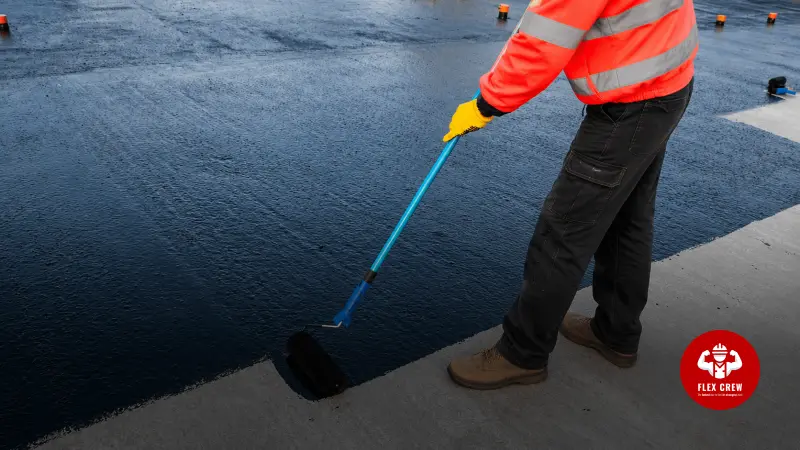
Key Takeaways
The main types of waterproofing for buildings include cementitious, bituminous, liquid-applied membrane, polyurethane, and preformed sheet systems.
Non-weather water damage costs the U.S. construction industry roughly $16 billion annually, per Nationwide claims data.
Each waterproofing method suits different areas: bathrooms and basements need different treatments than roofs or swimming pools.
Skilled installation matters more than material choice; poor workmanship causes most waterproofing failures.
Texas, Florida, and Georgia climates each create specific waterproofing challenges tied to humidity, heat, and storm exposure.
Why Waterproofing Deserves Real Attention
Concrete is never fully watertight on its own. Even the densest pour has microscopic pores that let moisture pass through over time. That moisture causes rebar to rust, concrete to spall, and interiors to suffer costly damage. Basements, kitchens, bathrooms, balconies, terraces, swimming pools, water tanks, and exterior walls all need some form of protection.
The financial case is well documented outside the construction trade press, too. The Insurance Information Institute's claims analysis puts the average U.S. water damage and freezing claim at roughly $12,500 between 2017 and 2021, and Nationwide reports that large-loss water claims over $500,000 have doubled since 2015. Those figures aren't specific to waterproofing failures alone, but they show how quickly water intrusion turns into a five- or six-figure problem when it isn't caught early.
These numbers make a strong case for treating the types of waterproofing for buildings as a budget line item, not an afterthought bolted on at the end of a project.
Reddit threads from contractor communities echo this at the job-site level. In one widely discussed post on r/Construction, a homeowner asked whether a greenboard with a surface coating was enough for a shower wall.
The consensus from tradespeople was blunt: greenboard resists mildew, not water, and full coverage with a proper waterproofing membrane is non-negotiable in wet areas. That kind of real-world feedback reflects why understanding the types of waterproofing for buildings isn't just theory. It's the difference between a shower that lasts twenty years and one that needs gutting in three.
The Main Types of Waterproofing for Buildings
Builders generally group the types of waterproofing for buildings into a few broad categories: cementitious, bituminous, liquid-applied membranes, polyurethane, and preformed sheet membranes. Each has strengths, limitations, and ideal use cases, summarized below.
Cementitious Waterproofing
Cementitious waterproofing is the simplest and most affordable option on the market. It's a powder mix of cement, sand, and additives that forms a waterproof seal once combined with water. This is one of the most common types of waterproofing for buildings used indoors, especially in bathrooms, kitchens, and toilets.
The tradeoff is flexibility. Cementitious coatings are rigid or semi-flexible at best, so they aren't ideal for surfaces exposed to constant movement or direct sunlight. Polymers are often added to improve durability and reduce cracking. For house slab waterproofing, cementitious crystalline products are popular because they penetrate the concrete and fill capillary pores from within, rather than just sitting on the surface.
Bituminous Waterproofing
Bituminous waterproofing, made from asphalt-based compounds, comes in two forms: coating and membrane. Bituminous coatings work well on foundations and below-grade walls but turn brittle under prolonged sun exposure unless modified with polyurethane or acrylic polymers.
Bituminous membranes arrive in rolled sheets, either self-adhesive or torch-applied, with thicknesses between two and four millimeters. These membranes handle retaining walls, basements, flat roofs, and bridges well. In hot, humid states like Florida and Georgia, contractors often prefer modified bitumen membranes because they resist softening better than standard asphalt coatings during summer heat.
Liquid-Applied Membrane Waterproofing
Liquid-applied membranes, often called LAMs, offer more flexibility than cementitious systems. They form a seamless, rubbery coating that stretches and returns to shape without tearing. This makes them a strong choice among types of waterproofing for buildings that face structural movement, like terraces, podiums, and tank linings.
Applied by trowel, spray, roller, or brush, these coatings typically include a primer layer and two top coats. Some systems are reinforced with glass fiber for added tensile strength. Liquid membranes can last up to 25 years, which makes them attractive for renovation projects across Texas commercial buildings and Florida coastal properties alike.
Polyurethane Waterproofing
Polyurethane systems combine a polyol base with an isocyanate reactor to create a liquid coating with excellent flexibility and UV resistance. Among all the types of waterproofing for buildings, polyurethane offers some of the strongest chemical resistance, standing up to oils, detergents, and general wear.
It's not without risk. Polyurethane can irritate skin and lungs during application, so it should always be handled by trained, experienced applicators. Moisture content in the concrete slab must be checked carefully beforehand, or the membrane can peel or debond later. This is exactly the kind of task where hiring a certified, experienced tradesperson matters more than cutting costs.
Preformed Sheet and Membrane Systems
Preformed sheet membranes, including APP-modified bitumen sheets, PVC membranes, and EPDM membranes, are laid over a surface and bonded using heat, adhesives, or tape. These systems suit flat roofs, gutters, basements, and retaining walls where a durable, factory-made product beats a field-mixed coating.
PVC membranes, in particular, offer high tensile strength and long service life compared to older APP membranes. For large commercial projects, especially warehouses and light industrial buildings common across FlexCrew's Texas and Georgia markets, sheet-based systems are often the go-to for roof waterproofing.
Matching the Right Waterproofing Type to the Job
Choosing among the types of waterproofing for buildings depends heavily on location, exposure, and budget. The table below breaks it down by area of the building.
Climate plays a bigger role than most builders expect. Gulf Coast humidity accelerates degradation in poorly chosen materials, while Georgia's freeze-thaw swings can stress rigid cementitious coatings over time. Contractors managing projects across these regions need crews who understand regional material behavior, not just a generic installation checklist.
Why Skilled Installation Matters More Than Material Choice
Quora responses from industry professionals consistently point to the same conclusion: workmanship determines waterproofing success more than the product itself. A high-end polyurethane system installed incorrectly will fail faster than a basic cementitious coating applied by an experienced crew. Reddit contractor discussions back this up too, with tradespeople repeatedly warning against skipping manufacturer specifications or applying inadequate coats.
This is where staffing decisions directly affect project outcomes. When a project is behind schedule, it's tempting to fill a waterproofing role with whoever is available. FlexCrew exists to remove that tradeoff. Contractors across Texas, Florida, and Georgia use FlexCrew to find qualified waterproofing installers and related skilled trades, so they're not choosing between speed and quality on jobs where the types of waterproofing for buildings decision has long-term consequences.
Practical Steps for Planning a Waterproofing Project
Start by identifying the exposure level of the area. Basements and water tanks face constant hydrostatic pressure, while balconies and roofs deal with UV exposure and thermal cycling. This distinction narrows down which types of waterproofing for buildings actually apply.
Next, budget realistically using the timeframes below as a rough guide.
Finally, hire experienced labor. A skilled crew member who understands surface prep, moisture testing, and reinforcement placement prevents the majority of common failures. FlexCrew's job placement support connects workers with contractors actively hiring for these roles, and its AI-driven resume builder helps tradespeople highlight relevant certifications and hands-on waterproofing experience, making it easier for hiring managers to match the right person to the right job.
Waterproofing Trends Worth Watching
Crystalline cementitious products are gaining traction for house slab waterproofing because they self-heal minor cracks as the concrete cures. Polymer-modified bituminous membranes continue to replace older, brittle asphalt coatings in humid Southern climates. Liquid-applied systems remain popular for renovation work since they layer directly over existing membranes without demolition.
For contractors bidding new work in Texas, Florida, or Georgia, staying current on these shifts helps win contracts that specify modern materials. It also affects staffing needs, since newer application methods sometimes require different skill sets than traditional trowel-and-mix cementitious work.
Bringing It All Together
Every building project eventually runs into the same question: which of the types of waterproofing for buildings fits this specific surface, budget, and climate? There's no single right answer, only the right combination of material and skilled labor for the situation at hand.
Cementitious systems handle indoor wet areas affordably. Bituminous and sheet membranes protect basements and roofs. Liquid and polyurethane coatings offer flexibility and longevity where movement and UV exposure are concerns.
Choosing correctly among the types of waterproofing for buildings up front is almost always cheaper than fixing a failure after the fact. Getting this right protects against the kind of six-figure claims that Nationwide and the Insurance Information Institute track every year.
If you're a contractor in Texas, Florida, Georgia, or another FlexCrew market looking for skilled waterproofing crews, or a tradesperson looking for your next placement, FlexCrew can help connect the right people to the right project.
Reach out to FlexCrew today to staff your next waterproofing job with confidence, or build your profile with the AI resume builder to get matched faster.