
A warehouse floor peels within eight months. A restaurant restroom starts bubbling after the first deep clean. A metal building rusts through its topcoat two summers after installation. These failures usually trace back to one decision: the wrong paint for the wrong surface.
FlexCrew, a staffing partner serving construction and skilled trades across Texas, Florida, Georgia, and other active markets, works alongside contractors who deal with these failures daily. Understanding the types of commercial paint before a project starts is the difference between a coating that lasts a decade and one that needs redoing next year.
This blog walks through the major categories, backs them up with current industry data, and explains how the right crew makes the finish stick.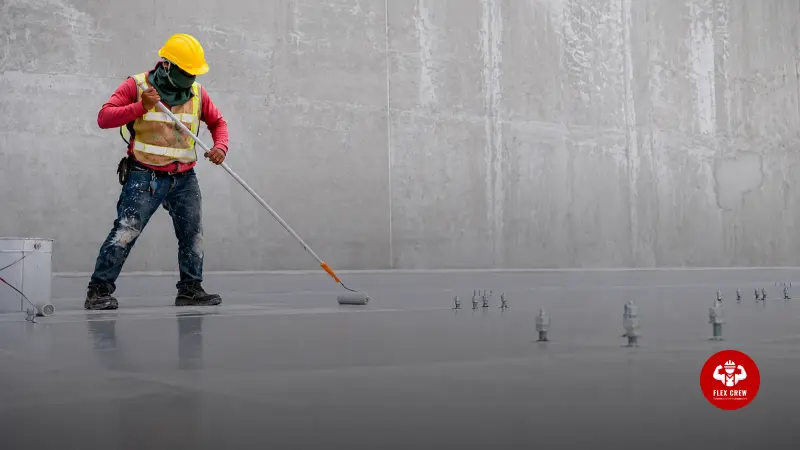
Key Takeaways
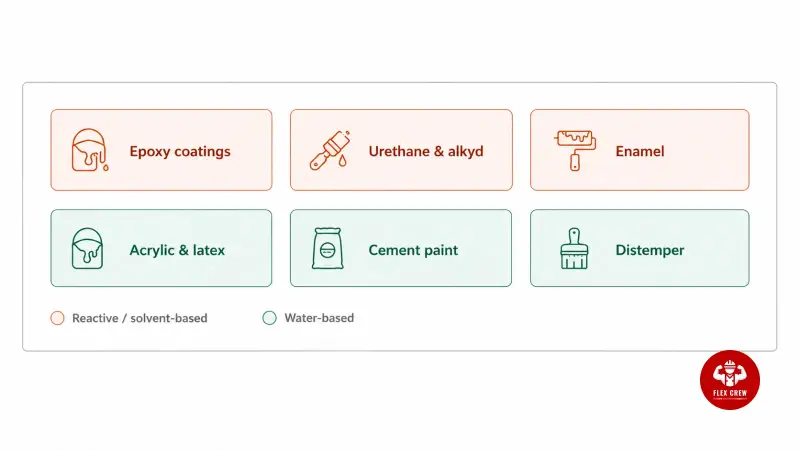
The types of commercial paint include epoxy, acrylic/latex, urethane, alkyd, enamel, and cement paint.
The U.S. paints and coatings market reached roughly $38 billion in 2026, with waterborne products holding a growing share of that total, according to Mordor Intelligence.
Federal infrastructure spending is driving demand for zinc-rich primers, epoxies, and polyurethane topcoats rated for 25-year service life on roads and bridges.
Construction and maintenance painters earned a median wage of $48,660 in 2024, per the U.S. Bureau of Labor Statistics, with 28,100 job openings projected annually through 2034.
Hiring experienced painters through a staffing partner like FlexCrew reduces callbacks and keeps commercial projects on schedule in Texas, Florida, and Georgia.
Why the Type of Commercial Paint You Choose Actually Matters
Commercial spaces don't behave like homes. A break room deals with grease and constant scrubbing. A locker room fights standing water. A warehouse floor absorbs forklift traffic and chemical spills every day.
Contractors who test coatings side by side see this play out directly. In one widely viewed durability comparison, a basic oil-based enamel scratched and softened after a single bleach exposure test, while two-component urethanes and epoxy-hybrid coatings showed no damage at all. That gap in performance is exactly why the types of commercial paint matter more than the price tag on the can.
The market backs this up. The U.S. paints and coatings market was valued at roughly $38.05 billion in 2026 and is projected to reach $46.92 billion by 2031, according to Mordor Intelligence. Architectural coatings alone made up over 45% of that value in 2025, and demand is concentrated in Sun Belt states, including Texas and Florida, where commercial permitting activity is outpacing the national average.
The Main Types of Commercial Paint
Epoxy Coatings
Epoxy cures through a chemical reaction with an amine curing agent, producing a hard, chemical-resistant film. It's the standard choice for warehouse floors, industrial flooring, and non-slip surfaces in gyms and stadiums.
Acrylic and Latex Paints
These use an acrylic emulsion polymer as a binder and dry as water evaporates from the film. They're budget-friendly, low-odor, and common on interior walls and ceilings that don't face heavy chemical exposure.
Urethane and Alkyd-Based Paints
Two-component urethanes hold gloss and color under repeated scrubbing and traffic. Alkyd paints, made from chemically modified soybean or linseed oil, were once a commercial standard but have lost ground to acrylics and urethanes due to slower drying and stronger odor.
Enamel Paints
Enamel refers to any oil or alkyd-based paint with a hard, glossy finish. It's specified for trim, doors, and metal fixtures that need a polished commercial look.
Cement Paint
A water-based option applied to brick and concrete, cement paint resists water penetration and helps reduce dirt buildup on large exterior surfaces.
Distemper
An older, inexpensive interior finish made from natural clays. It applies easily but isn't washable and fades faster than modern emulsion paints, so it's rarely used in commercial settings today.
Comparing the Types of Commercial Paint
Types of Commercial Paint for Metal Surfaces
Metal buildings and structural steel need primer before anything else. Red oxide primers remain common for structural steel because they hide well and resist UV light, though the pigment is dense and harder to grind during manufacturing.
Federal infrastructure spending is reinforcing this trend at scale. Allocations for roads and bridges are driving orders for zinc-rich primers, epoxies, and polyurethane topcoats engineered for a 25-year service life, according to Mordor Intelligence's 2026 industry analysis. For finished metal buildings, acrylic-latex or urethane topcoats made specifically for metal typically deliver the best combination of adhesion and weather resistance.
Commercial Paint Application Snapshot
This table can be adapted into a visual infographic for the published blog, using icons for each project type and a color-coded durability scale.
Primer: The Step Businesses Often Underestimate
No breakdown of the types of commercial paint is complete without primer. Primer seals cracks and pores, then creates the adhesion layer the topcoat needs to hold.
Primers are typically formulated with high pigment volume concentration to keep costs down while still sealing the surface. Skipping primer on drywall, metal, or masonry is one of the most common reasons commercial coatings fail early, regardless of how good the topcoat is.
Environmental Regulations Are Reshaping the Types of Commercial Paint
Waterborne coatings now account for a large and growing share of the market, driven partly by EPA regulations under the National Emission Standards for Hazardous Air Pollutants, which are pushing manufacturers toward lower-VOC formulations. This shift matters for facility managers in Texas and Florida, where indoor air quality standards and tenant comfort are increasingly part of commercial lease agreements.
Staffing the Right Crew for Commercial Paint Projects
Picking the right paint solves half the problem. Application solves the other half. Two-component epoxies and urethanes require precise mixing ratios and defined application windows. A rushed crew wastes expensive material and shortens the life of the coating.
FlexCrew connects contractors in Texas, Florida, Georgia, and other active markets with painters, finishers, and general laborers experienced in commercial-grade coating systems. Contractors can scale a crew up for a large epoxy floor job or bring in a smaller team for a quick trim repaint, without long hiring delays.
This flexibility matters more as the labor market tightens. The BLS projects 28,100 painter job openings annually through 2034, even though overall employment growth in the trade is modest. That gap between demand and supply makes fast, reliable staffing a real competitive advantage for contractors bidding on commercial work.
For Workers: Building a Career in Commercial Painting
Painters with hands-on epoxy and urethane experience tend to land commercial jobs faster, since fewer applicants have that specific skill set. The median wage for construction and maintenance painters was $48,660 in 2024, according to BLS data, and commercial and industrial specializations often pay above that median.
FlexCrew's AI Resume Builder helps painters and finishers spell out this experience clearly, listing specific systems like epoxy flooring or two-component urethane application. That level of detail helps contractors searching for a specific skill find the right candidate faster.
Choosing the Right Type of Commercial Paint for Your Project
There's no universal answer. Wet, high-traffic areas call for epoxy. General office space does well with acrylic or urethane. Metal buildings need the correct primer-topcoat pairing to prevent corrosion.
Plan on three to ten days for a mid-sized commercial paint job, from prep to final coat, depending on square footage and cure requirements. Epoxy systems typically need 24 to 48 hours of cure time between coats, so build that into any schedule before committing to a deadline.
Talk with your contractor about which types of commercial paint fit your space, traffic level, and climate before the project starts. Then confirm the crew applying it has real experience with that specific system.
If you're a business in Texas, Florida, Georgia, or a nearby market and need skilled painters, finishers, or general labor for a commercial paint project, FlexCrew can help you find qualified workers quickly. If you're a painter looking for your next job, build your profile with FlexCrew's AI Resume Builder to get matched with contractors who need your specific coating experience.