
Every general contractor eventually asks the same question: what separates rough clean vs final clean construction work, and why does it matter for the bid? The two phases look similar on paper but behave nothing alike on site. Confuse them, and a bid that looked profitable on Monday can lose money by Friday.
This is the exact problem FlexCrew was built to solve. FlexCrew is a staffing partner for construction and light industrial businesses across Texas, Florida, Georgia, and other growing markets.
Contractors bidding post-construction cleaning come to FlexCrew because the labor needs of a rough clean and a final clean are genuinely different jobs, and staffing them the same way is where most companies lose margin.
Key Takeaways
Rough clean vs final clean construction are two separate jobs, not two names for the same task.
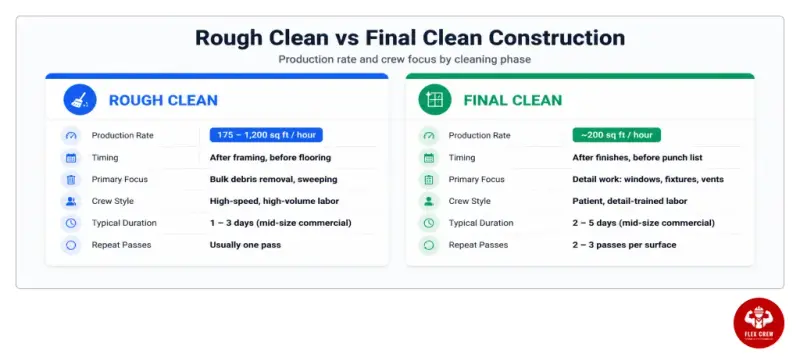
Rough cleaning moves fast and covers 175 to 1,200 square feet per hour; final cleaning slows down to roughly 200 square feet per hour.
The EPA reports the U.S. generated about 600 million tons of construction and demolition debris in 2018, most of which rough clean crews are the first to touch.
OSHA data shows nearly 2 million construction workers are exposed to respirable silica dust, which is why proper equipment and trained crews matter in both phases.
Reading the full bid scope before pricing prevents the single most expensive mistake in this industry: missing a hidden phase.
What Rough Cleaning Actually Covers
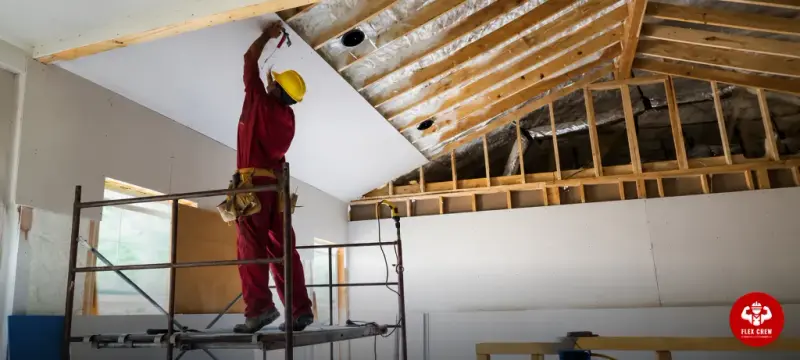
Rough cleaning happens early. It usually starts right after framing and drywall go up, before flooring and fixtures arrive. The goal is simple: clear the site enough for the next trade to work safely.
Crews haul out construction debris, sweep up drywall scraps, and pull trash and packaging out of the way. This is not a detailed job. It is bulk removal, and it moves fast. Production rates on a rough clean can range from 175 to 1,200 square feet per hour, depending on how much debris is on site and whether dust removal is included in the scope.
That range is wide because scopes vary so much. Some general contractors only want a broom-and-dustpan sweep. Others expect crews to wipe down dust and soil from surfaces before the next trade moves in. Always confirm which version you are bidding, because it changes your labor hours significantly.
This is also the phase where debris volume matters most. The U.S. Environmental Protection Agency estimates the country generated roughly 600 million tons of construction and demolition debris in 2018 alone, more than double the volume of municipal solid waste generated that same year. Rough clean crews are usually the first team to physically handle a share of that volume on any given job.
What Final Cleaning Actually Covers
Final cleaning is the opposite end of the spectrum. It happens after all finishes are installed, right before the space is handed over for occupancy or inspection. This is the detail work: windows, light fixtures, vents, cabinets, baseboards, and every visible surface.
Where rough cleaning moves fast, final cleaning moves slow and careful. Realistic production rates land around 200 square feet per hour, sometimes less on detail-heavy spaces like restaurant kitchens or medical offices. Crews often clean each surface two to three times to remove fine drywall and concrete dust that resettles after the first pass.
This is the core of rough clean vs final clean construction pricing. Rough cleaning is about volume and speed. Final cleaning is about precision and repetition. A crew that treats both phases the same way will either overcharge for rough work or lose money on final work.
Rough Clean vs Final Clean Construction: Side-by-Side Comparison
The table below summarizes how the two phases differ across the factors that matter most for staffing and pricing.
The Middle Phase Contractors Forget
Between rough and final, many projects include a touch-up or "punch" clean. This happens after the architect and construction manager walk the site and flag items that still need fixing. Once trades come back to make repairs, they leave a mess behind, and someone has to clean it again.
Smart cleaning contractors protect themselves here. When a room is finished, post a completion notice with your company name and date on the door. Have the site supervisor sign off before you move to the next room. This single habit prevents disputes later about whether a room was actually cleaned.
It also sets up billing for re-cleaning. If painters or electricians track dust back into a signed-off room, that is billable time and materials work, not a freebie. Contractors who skip this step often eat the cost of re-cleaning rooms that were already finished once.
Reading the Scope Before You Bid
One of the most expensive mistakes in this industry is skipping the fine print. Bid documents may list "final cleaning only," or they may bury language requiring a final, punch, and trade clean across the same scope. That difference can cost tens of thousands of dollars in labor if missed.
Before pricing any job, ask the general contractor directly how many cleaning phases the project requires. Ask whether rough cleaning has already happened. Ask what they mean by any unfamiliar term, like a "powder puff" clean, since terminology varies by market and by contractor.
Walking the site before bidding matters just as much for rough clean vs final clean construction pricing as reading the paperwork. Dust settles into HVAC vents, inside cabinets, and on top of pipes in ways that square footage numbers never capture.
Staffing Each Phase the Right Way
Rough cleaning and final cleaning require different labor, not just different techniques. Rough clean crews need stamina and speed. They are hauling debris, sweeping large volumes of material, and covering ground quickly. Final clean crews need patience and attention to detail, since one missed streak on a window or one dusty vent cover can trigger a callback.
This is where staffing strategy becomes part of the profit equation. A contractor in Houston running a 30,000-square-foot rough clean needs a different headcount and skill mix than a Tampa restaurant final clean happening two weeks before opening. Georgia projects juggling apartment turnovers face similar staffing swings between phases.
FlexCrew helps contractors in these markets fill both ends of that gap. FlexCrew connects businesses with light industrial staffing for high-volume rough clean work and with skilled trades support, including plumbing, electrical, HVAC, welding, and carpentry professionals, when punch list repairs overlap with cleaning schedules. Matching the right worker to the right phase keeps production rates on target and protects your margin.
Silica dust is worth flagging here too. OSHA data shows that close to 2 million construction workers are exposed to respirable crystalline silica across more than 600,000 workplaces nationwide. Both rough and final clean crews benefit from proper dust control training, not just for compliance but for the long-term health of the workforce doing this labor-intensive work.
Realistic Timeframes and Rates by Region
Timelines and rates vary by project size and market. The table below gives general planning ranges for three of FlexCrew's active regions.
Restaurant final cleans tend to run on the higher end of any range. Expect pricing around two to three times a standard deep clean, since grease traps, hoods, and stainless surfaces all need extra attention. Window cleaning is almost always a separate line item, since manufacturing film and construction overspray require different tools than a standard squeegee pass.
Protecting the Job with Waivers and Sign-Offs
Windows deserve special attention in any conversation about rough clean vs final clean construction. Manufacturing debris on tempered glass is invisible to the eye but can scratch when scraped incorrectly. Without a signed waiver from the general contractor, your crew could be blamed for damage that existed before you arrived.
Before final cleaning begins, walk the space and check whether windows were covered during construction. Document any overspray, drywall mud, or adhesive residue you find. Get a waiver signed if unconventional cleaning methods, like razor scraping, will be needed to remove that debris.
The same documentation habit applies to every completed room or area. A signed-off checklist protects your crew from disputes and gives you leverage to bill for any re-cleaning caused by other trades later in the project.
Building the Right Crew for Both Phases
Finding workers who can move between rough and final cleaning, or who specialize in one phase, takes real staffing infrastructure. FlexCrew works with contractors across active markets to fill these roles quickly, whether the need is a five-person rough clean crew for next week or ongoing final clean staff for a multi-phase build.
For workers looking to get placed on these jobs, FlexCrew's AI resume builder helps highlight relevant experience, whether that is debris removal, detail cleaning, or trade skills like carpentry and HVAC work that overlap with punch list repairs. A clear, well-built resume moves workers into placement faster, which matters when project timelines are tight.
Contractors benefit from this same speed. When a rough clean job lands with a two-day notice, having a staffing partner who understands the difference between rough clean vs final clean construction labor needs means the right crew shows up, not just any crew.
Getting the Bid Right the First Time
The businesses that profit consistently from post-construction cleaning are the ones that treat rough clean vs final clean construction as two distinct jobs, priced and staffed separately. They walk every site before bidding. They read the full scope, not just the summary line. They document sign-offs and protect themselves with waivers before final cleaning begins.
If you are bidding on a project in Texas, Florida, Georgia, or another growing market and need help staffing either phase, FlexCrew can connect you with light industrial and skilled trades workers ready to move fast.
Visit FlexCrew to start building your crew, or use the AI resume builder if you are a worker looking to get placed on your next rough clean vs final clean construction job.