
A contractor in Dallas wins a bid on a 30-unit residential complex. Groundbreaking is six weeks out. He has a foreman, two framers, and a handshake deal with a plumber who may or may not be available. He needs to hire crew for a construction project a full one and the clock is already running.
This is the situation hundreds of contractors face every month across Texas, Florida, Georgia, and the rest of the Sun Belt, where construction pipelines are packed and the labor market hasn't caught up. Knowing how to build a reliable crew quickly without cutting corners on quality is one of the most valuable skills a project manager or GC can develop.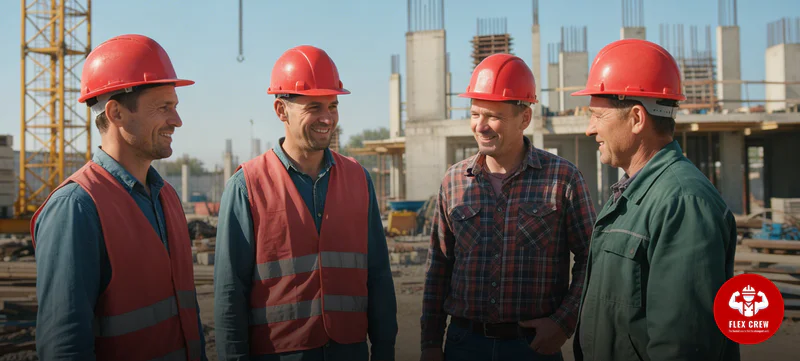
FlexCrew (flexcrewusa.com) was built specifically for this problem. They connect contractors with pre-screened, skilled tradespeople across active construction markets, and they do it without the months-long timelines that make traditional hiring so painful. But even with a strong staffing partner in your corner, the process works best when you understand what you're actually dealing with.
Why the Labor Market Makes This Harder Than It Should Be
The skilled trades shortage has been building for over a decade. Across the South and Southeast where states like Florida, Texas, and Georgia are seeing sustained construction booms the demand for licensed electricians, HVAC technicians, plumbers, welders, and experienced carpenters has consistently outpaced supply.
Part of this is generational. For a long stretch, vocational training was quietly deprioritized in favor of four-year degrees, and the trades paid the price. Experienced workers aged out, younger ones didn't come in to replace them at the same rate, and here we are. In markets like Houston, Miami, and Atlanta, a single large commercial project can absorb hundreds of skilled workers, pulling from the same limited pool that everyone else is competing for.
What this means practically is that waiting until two weeks before your start date to staff up is a losing strategy. By then, the best available workers in your area have already taken other gigs. You're left with whoever's still free and there's usually a reason they're still free.
The contractors who hit their timelines consistently aren't necessarily better than the ones who don't. They just start the staffing conversation earlier and they're more deliberate about how they hire.
What It Actually Takes to Hire Crew for a Construction Project
When contractors say they need to hire crew for a construction project, they're rarely talking about one role. They need a full bench and each position has its own requirements, timelines, and verification steps. General laborers are relatively quick to place. Licensed trades like journeyman electricians or master plumbers take longer, sometimes two weeks or more depending on your market and the project's specific requirements.
Before you make a single call or post a single listing, you need clarity on four things: what trade or skill each role requires, what certifications or licenses are non-negotiable, when you need each worker on-site, and what your site conditions look like. That last one matters more than people expect. A welder who's spent five years on pipeline jobs in West Texas may not be the right fit for precision structural work on a high-rise in downtown Tampa. Context shapes the hire.
With that information in hand, the actual hiring process becomes much more manageable whether you're handling it in-house or working through a staffing partner.
Here's how the timeline typically plays out with a staffing firm like FlexCrew:
These aren't worst-case estimates they're realistic ones. And they assume you're working with a staffing partner who already has a pre-screened worker pool in your region. If you're sourcing on your own through job boards or word of mouth, add time.
The Hiring Mistakes That Cost Contractors the Most
Pressure creates shortcuts. And on a construction project, shortcuts in hiring tend to multiply into bigger problems once the job is underway.
The most common mistake is hiring for availability instead of fit. When you're behind schedule and someone shows up with a pulse and a tool belt, it's tempting to put them to work. But an underqualified worker on a live site creates rework, safety exposure, and morale problems for the people around them. The short-term relief isn't worth the downstream cost.
Skipping credential verification is the second big one. Licensing laws for electrical and plumbing work vary by state a journeyman licensed in Georgia may need additional steps to legally work in Florida. It's not complicated to verify, but it gets skipped constantly under pressure. A five-minute license check before you make an offer saves you from a compliance headache mid-project.
The third mistake is underestimating soft skills. Showing up on time, communicating clearly with a foreman, following site safety protocols these things aren't soft in any meaningful sense. They're the difference between a crew that executes and one that has constant friction. Reference checks with previous contractors are worth every minute they take.
Finally, contractors consistently underplan for attrition. People leave jobs mid-project. It happens. If your project needs 20 workers to finish on time, your workforce plan should account for 22 or 23. Build the buffer in from the start rather than scrambling to fill gaps in week seven.
How FlexCrew Handles the Heavy Lifting
FlexCrew's focus is specifically on skilled trades and construction staffing not general office work or hospitality or retail. That focus matters because their worker network actually reflects what a job site looks like. Electricians, plumbers, HVAC technicians, welders, carpenters, framers, and general construction laborers these are the people in their pipeline, pre-screened and available across their service markets.
For a contractor in Orlando who needs a licensed electrician and three framers by next Wednesday, FlexCrew does the matching work trade, certification, availability, location so the contractor doesn't have to spend three days on the phone chasing leads that go nowhere. That's not a small thing when you're managing an active project.
Their coverage spans the major construction markets in the South: Houston, Dallas, and San Antonio in Texas; Miami, Tampa, and Orlando in Florida; Atlanta and Savannah in Georgia and expanding markets beyond. For contractors running projects across multiple states or managing large commercial builds, that regional depth is genuinely useful.
FlexCrew also serves workers directly, not just employers. Their AI-powered resume builder helps tradespeople people who've spent years developing real skills but never needed a polished resume build profiles that actually get seen by the right contractors. It's a small tool that removes a real barrier.
Start the Process Before You're Under Pressure
The contractors who hire crew for a construction project well aren't doing anything magical. They're starting earlier, being specific about what they need, verifying credentials before problems arise, and working with partners who know the local labor market.
If your next project is six weeks out, the right time to start staffing conversations is now not the week before groundbreaking. By then, your best options are already gone.
FlexCrew works with contractors across Texas, Florida, Georgia, and beyond to build crews that show up, do the work, and help projects finish on schedule. If that's what you need, visit flexcrewusa.com and start the conversation today.