
AtFlexCrew, we spend every day connecting skilled tradespeople and motivated beginners with contractors who need dependable crews. One question keeps coming up from workers planning their next move: are construction jobs in Indiana worth pursuing, and how do you actually land one? The short answer is yes. Indiana has steady infrastructure, industrial, and commercial work. Getting in, though, takes more than clicking "apply" on a job board.
This blog covers where the work is, what it pays, how union and non-union paths compare, and what beginners can do to get hired. We've combined federal labor data with advice from union members, contractors, and real job seekers. The same playbook also applies if you're weighing Indiana against growing markets like Texas, Florida, and Georgia.
Key Takeaways
Indiana's construction workforce reached roughly 178,800 workers in mid-2026, adding about 3,700 jobs year over year.
Construction laborers in Indiana earn a median of about $24 per hour, according to BLS wage data.
Union apprenticeships typically start near 50% of journeyman pay and reach full scale in about four years.
Phone calls and jobsite visits often beat online applications for entry-level roles.
Spring is the strongest hiring window, and basic certifications can shorten your search from months to weeks.
Why Construction Jobs in Indiana Are in Demand
Indiana calls itself the "Crossroads of America" for good reason. Interstate freight, warehouses, factories, and highway projects keep construction crews busy year-round. Data centers, healthcare campuses, and public works add even more demand.
The numbers back this up. Bureau of Labor Statistics data compiled by the Associated General Contractors shows Indiana's seasonally adjusted construction employment at 178,800 in June 2026, up 3,700 jobs, or 2.1%, from June 2025. Employment does dip in winter. Federal data shows Indiana's unadjusted construction headcount falling from 176,300 in October 2025 to 167,900 in December 2025. That seasonal swing matters when you plan your job search.
Workforce groups are stepping up to close the skills gap. TheIndiana Construction Roundtable Foundation runs education and training programs that connect students and adults to entry-level construction careers. Retirements are outpacing new entrants, which creates real openings for people willing to learn. (Our guide onconstruction's aging workforce explains why this gap keeps widening.)
Where the Work Is: Indiana's Top Construction Markets
Every Indiana metro has its own mix of projects. Knowing what drives each market helps you target the right employers.
Indiana Construction Hiring by City
Construction jobs in Indianapolis make up the biggest share of openings. Many large general contractors and specialty subcontractors are based there. If you're targeting the capital, our deeper guides onconstruction jobs in Indianapolis andentry-level construction jobs in Indianapolis break down local employers and pay.
Smaller cities deserve a look too. Construction jobs in Fort Wayne, Indiana, and construction jobs in Evansville, Indiana, often see less applicant competition. A shorter commute and smaller labor pool can work in your favor.
What Construction Jobs in Indiana Pay
Pay depends on your trade, your experience, and whether you work union. Here's what federal data shows. According to BLS Occupational Employment and Wage Statistics, construction laborers in Indiana earn a median salary of $50,070, or about $24.07 per hour. Specialized and office-side roles pay more. BLS data shows Indiana cost estimators earn a median of $73,430 per year.
For skilled trades, theBLS Occupational Outlook Handbook offers useful national benchmarks. Indiana pay typically lands near these figures, with union scales often higher.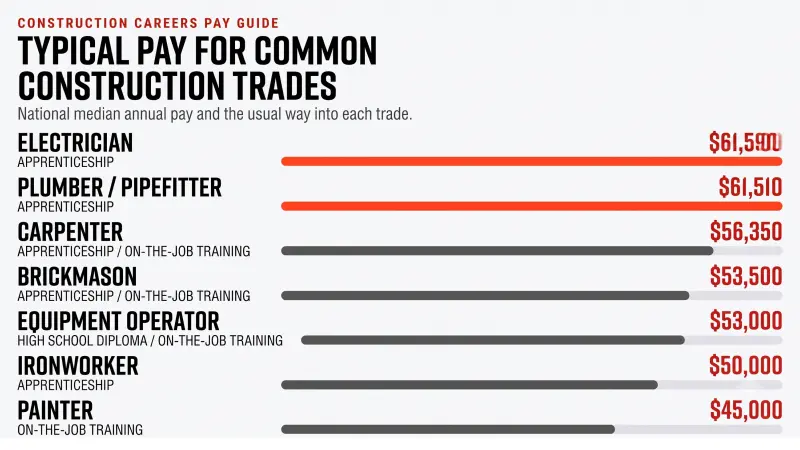
Figures rounded from BLS May 2024 national data. Local wages vary by metro, union status, and experience.
The highest-paying construction jobs in Indiana usually go to licensed electricians, pipefitters, crane operators, and superintendents. For a broader comparison, see our breakdown of thehighest-paying construction trades.
Benefits matter as much as the hourly rate. Scott Schar has been a member of Operating Engineers Local 181 since 2002, joining at age 21. He spent about 23 years in asphalt before launching his own owner-operator business. In his words, union benefits, pension, and family insurance deliver a quality of life that's hard to match on the non-union side.
Union vs. Non-Union: Which Path Fits You?
Both paths can lead to a strong career. They simply work differently.
Union vs. Non-Union Construction Paths
One union member on Reddit laid out the typical apprentice ladder clearly. First-year apprentices often earn about 50% of journeyman scale. That rises to roughly 75% in year two, 90% in year three, and 100% at journeyman level. Indiana has active locals for laborers (such as Local 120), operating engineers (Local 181), electricians, carpenters, and more. You can search registered programs onApprenticeship.gov.
Timing is the main hurdle with unions. Applications may open only at certain points in the year. One contractor noted that having a member company "sponsor" you can speed up placement.
Non-union contractors usually hire faster. Many workers apply to a union, then take non-union work while waiting. Every month on a jobsite strengthens that application.
Construction Jobs in Indiana With No Experience
Here's the honest truth from people who've lived it. Breaking in with zero experience is harder than many expect.
One Reddit user spent over a year applying online without success. He had family connections in excavation and still couldn't land a laborer spot. Then he called a number off a jobsite sign. He had an interview the next day. That one call did more than a year of emailed resumes.
His story is common. Contractors are busy, and many fill roles by word of mouth. If you want entry-level construction jobs in Indiana, you need to be visible, not just online.
Experienced foremen and contractors offered consistent advice. The best beginners do the work others avoid, like pipe laying, flagging, and cleanup. Flexibility earns trust, and trust earns seat time on equipment.
Certifications also send a strong signal. AnOSHA 10-Hour Construction card costs little and shows you take safety seriously. Forklift, aerial lift, and skid steer certifications help too. Some workers add a CDL, since contractors value people who can haul equipment and material. Our guide onhow to get hired in construction with no experience goes deeper on this.
A Realistic Step-by-Step Plan to Get Hired
If you're starting from scratch, this timeline reflects how hiring actually happens.
In weeks one and two, build a trade-focused resume. Highlight physical work, reliability, tools you've used, and any certifications. FlexCrew'sAI Resume Builder helps here. It turns warehouse, landscaping, or factory experience into language construction hiring managers recognize.
During weeks two through four, earn your OSHA 10 and one equipment certification. Apply to union apprenticeships that match your interests. Check state job listings and training resources throughIndiana's Department of Workforce Development.
From weeks three through eight, make direct calls. Follow up on every application within a few days. Visit active jobsites and ask who handles hiring. Call non-hiring companies back monthly.
By months two through six, take the first solid offer that builds relevant skills. Treat it as paid education. Most motivated beginners we work with land a first role within one to three months, though winter searches can run longer.
How Staffing Partners Speed Up the Process
A construction staffing partner can cut weeks off your search. Agencies keep direct relationships with contractors who need workers now. Many of those roles never reach public job boards.
At FlexCrew, our job placement support connects workers with contractors across Texas, Florida, Georgia, and our other active service areas. We place general laborers alongside skilled tradespeople in plumbing, electrical, HVAC, welding, and carpentry. Browse current openings on ourskilled trades jobs page or exploretemporary jobs for workers. If you're comparing construction jobs in Indiana with work in Houston, Atlanta, or Orlando, the same preparation travels with you.
For contractors, the challenge runs the other way. Finding dependable crews fast is a constant headache. FlexCrew'sskilled labor staffing for businesses screens candidates for skills and work history. Indiana employers can also read ourconstruction staffing guide for Indiana contractors.
Tips for Standing Out to Indiana Contractors
Small habits separate workers who get callbacks. Show up early to interviews. Bring work boots and a hard hat if you own them. Answer your phone, because many contractors call once and move to the next name.
Be honest about your skill level. One veteran builder pointed out that overselling equipment experience can cost money or put people at risk. Contractors would rather hire a willing beginner than an overconfident one.
Finally, talk to everyone. Foremen, superintendents, and union members know who's hiring. Networking remains the most reliable route into construction jobs in Indiana.
Your Next Step Toward Construction Jobs in Indiana
Construction jobs in Indiana offer real career potential, from union apprenticeships with strong pensions to fast-moving non-union crews. Federal data shows steady demand across Indianapolis, Fort Wayne, Evansville, South Bend, and beyond. What separates successful candidates is preparation and persistence.
Start with a resume that speaks a contractor's language. Build yours in minutes with FlexCrew'sAI Resume Builder, thencreate your account to explore open roles. Hiring for a project?Find workers here. Whether you're building a career in Indiana, Texas, Florida, or Georgia, we're ready to help you reach the right jobsite faster.