
America is running out of skilled tradespeople. The construction research group NCCER estimates that 41% of the construction workforce will retire by 2031. A 2026 report by JLL, one of the largest commercial real estate firms in the world, projects that up to 2.1 million skilled trade jobs could go unfilled by 2030. That's not a slowdown, that's a structural labor crisis unfolding in real time.
The best trade jobs to learn right now aren't just stable. They pay well, they're in demand across Texas, Florida, Georgia, and the broader Sun Belt, and most of them don't require a four-year degree. At FlexCrew, we place skilled tradespeople with contractors every day, and what we see on job sites reflects exactly what the national data is saying.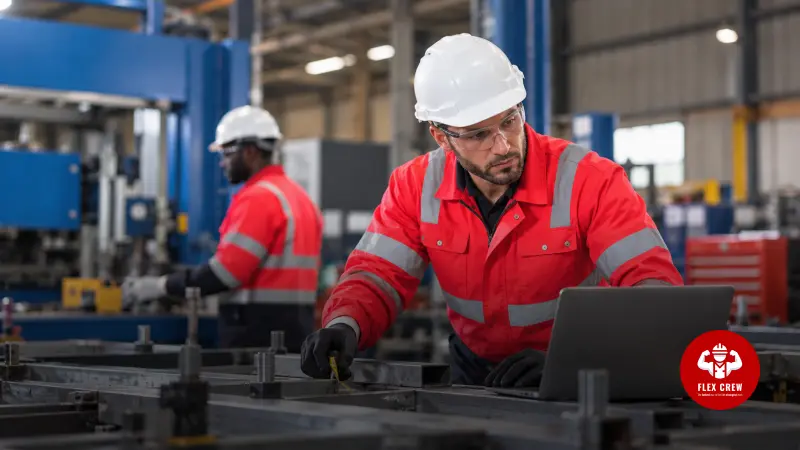
Key Takeaways
No college degree required, Most of the highest-paying trades use apprenticeships or vocational certificates, not a bachelor's degree
Fastest entry point, Heavy equipment operator can be trained in as little as 3–4 weeks through private programs
Highest earning trade, Elevator installer/repairer has a median pay of approximately $106,000/year
Paid-while-you-learn options, Electrician, plumber/pipefitter, and power line installer all pay from day one through union apprenticeships
Fastest-growing job in the US, Wind turbine technician, with 45–50% projected growth through 2032 per the Bureau of Labor Statistics
Top hiring markets, Texas, Florida, and Georgia are consistently among the highest-demand regions for skilled tradespeople
Why the Trades Are the Smartest Career Move Right Now
The math has flipped. According to the Georgetown Center on Education and the Workforce, there are at least 30 million jobs in the US paying more than $55,000 per year that do not require a bachelor's degree. Meanwhile, the average college graduate earns roughly $50,000 a year while carrying close to $38,000 in student loan debt, according to the National Association of Colleges and Employers (NACE).
The trade apprenticeship model inverts that entirely. You enter a program with no tuition, earn a wage from day one, and within four to five years you hold a journeyman license, the most portable credential in American labor. Plumbers in Houston, electricians in Tampa, HVAC techs in Atlanta, all working in fields with more jobs than qualified applicants.
This isn't a niche observation. Microsoft flagged in 2025 that a shortage of electricians was a real bottleneck for its data center buildout. When a trillion-dollar company's infrastructure plans are held up by a trades shortage, the signal is clear.
For workers deciding which skilled trades jobs and careers are worth pursuing, the table below gives a direct comparison.
Trade Job Comparison: Pay, Entry Path & Training Time
The Best Trade Jobs to Learn, Broken Down Honestly
Electrician: The Most In-Demand Skilled Trade Right Now
The electrician shortage is not a future problem. The National Electrical Contractors Association (NECA) projects a shortage of more than 411,000 electricians by 2030, before accounting for AI data center construction, EV charging infrastructure, and factory reshoring.
Median pay sits at roughly $62,000–$64,000 per year, per the Bureau of Labor Statistics. Contractors and master electricians regularly earn over $100,000. Entry is through an IBEW union apprenticeship, paid from day one, typically $22–$27/hour. By year five you hit full journeyman scale.
In Texas and Florida, the construction boom shows no sign of plateauing. Data centers are being built across the Dallas-Fort Worth Metroplex. Industrial parks are expanding throughout Central Florida. FlexCrew regularly places electricians into active sites where contractors cannot fill positions fast enough.
Who transitions well: military veterans from electrical roles, IT workers moving into hands-on work, anyone who's followed a schematic or wired anything.
Plumber and Pipefitter: Old Joke, Real Money
The country is already tracking toward a shortage of 500,000 plumbers. Median pay from the BLS sits around $63,000/year. In high-volume markets like Houston, Tampa, and Atlanta with overtime, experienced plumbers routinely clear $130,000 annually.
The United Association (UA) runs one of the strongest apprenticeship programs in American labor. Union data indicates an apprentice can earn more than $341,000 in cumulative wages across five years of training while earning a license. You pay nothing for school. You are paid to learn a skill that cannot be automated or offshored.
If you're curious how plumbing integrates into broader construction workflows, the FlexCrew blog covers how plumbing works in construction in detail. You can also find verified plumbing contractors through FlexCrew's licensed plumber hiring page.
Post-journeyman, plumbing is one of the clearest paths to self-employment, a master license lets you pull permits and run your own shop.
HVAC Technician: The Underrated Entry Point
The HVAC industry supports approximately 40,000 open positions every year nationally, per O*NET Labor Demand data. New federal regulations pushing millions of heat pump installations are generating sustained demand well into the 2030s. Median pay is around $60,000, with experienced techs earning close to $100,000.
The entry split before you commit:
Union Road — Pays from day one, approx. $21–$25/hour. No upfront tuition.
Trade School Road — Requires tuition of $5,000–$15,000 first. Faster completion (1–2 years).
Auto mechanics are the strongest natural transition group. Refrigerant circuits, electrical diagnostics, and mechanical repair, the skill overlap is significant. FlexCrew places HVAC techs across Georgia and Florida, including commercial projects in Atlanta and residential installs throughout South Florida.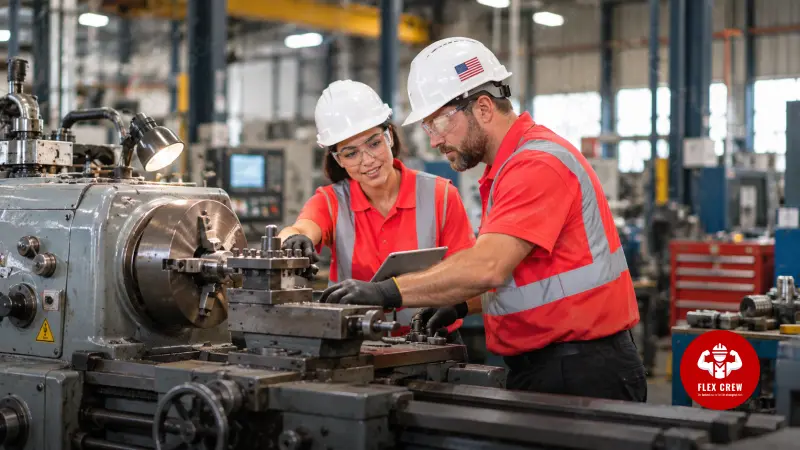
Welder: The Trade With the Widest Range
The American Welding Society projects a need for more than 320,000 new welders by 2029 in the US. Entry-level positions start around $40,000/year. Pipeline and specialty fabricators, working in oil and gas, aerospace, or structural steel, regularly earn $100,000 and above.
Honest note: unlike electrical and plumbing, welding usually requires paying for school first. Private programs typically cost $3,000–$15,000. The Boilermakers union offers a paid apprenticeship path, but it's the exception.
The upside is portability. A certified welder in Texas can work on pipeline projects, cross to manufacturing in Georgia, or shipyard work on Florida's Gulf Coast. For a deeper look at welding paths, see FlexCrew's guide on types of welders for construction. You can also review how much welders make by role and region.
Power Line Installer (Lineman): High Pay, Hard Work
Median pay is approximately $92,000/year, with utility-company positions routinely exceeding $100,000. First-year IBEW apprentices start at approximately $37/hour. The entire US power grid is being rebuilt for EVs, clean energy, and AI data centers.
Two things to know: most programs require a CDL before you apply. And this is the physically hardest trade on this list, pole climbing in every weather, storm restoration, long shifts. The pay reflects what the job demands.
Who transitions well: commercial truck drivers (CDL already cleared), military veterans from utilities, outdoor workers comfortable at height.
CNC Machinist: The Indoor Trade
Factories returning to American soil need machinists. The average time to fill a CNC machinist position is now 68 days nationally. Median pay is around $56,000, and programmers clear over $99,000/year. Registered paid apprenticeships are available through Department of Labor programs where you work full-time and take one class per week. No weather, no heights, no outdoor strain.
Who transitions well: factory floor workers, military mechanics, woodworkers and cabinet makers.
The Fastest-Growing Trade: Wind Turbine Technician
The Bureau of Labor Statistics projects 45–50% growth in wind turbine technician employment through 2032, the fastest-growing occupation in the entire US labor market.
Important context: the field currently employs around 14,000 workers nationally. A 50% growth rate sounds huge, but in raw headcount it's still smaller than electricians or plumbers. Getting in now means getting on the ground floor before competition catches up.
Most paths require paying for school first, programs run 7 months to 2 years and cost $10,000–$30,000. And you climb 200–300 feet every day. If heights aren't an issue, this is an early-entry opportunity in one of the fastest-expanding energy fields in the country.
Getting In With No Experience, What Actually Works
Union apprenticeships in electrical, plumbing, and HVAC require only a high school diploma or GED, basic math, a drug screen, and a physical. No trade background needed.
For workers building their application, FlexCrew's AI Resume Builder helps translate transferable skills into a format trades employers look for. For a full walkthrough, see FlexCrew's guide on how to get hired in construction with no experience.
Women in the Trades: Same Pay, Real Demand
The IBEW, UA, IUEC, and most registered apprenticeship programs actively recruit women. Pay in union programs is determined by scale, not gender, a female journeyman electrician earns the same rate as any other journeyman on that local's scale.
The Bureau of Labor Statistics reports women currently make up less than 4% of the construction trades workforce, a gap that also signals wide-open opportunity. FlexCrew has a detailed look at women working in construction and the paths expanding right now.
Trades in Texas, Florida, and Georgia Right Now
Texas leads the country in new construction permits, industrial development, and energy infrastructure. Florida's population growth keeps demand consistently above available labor supply. Georgia, particularly Atlanta is one of the fastest-expanding manufacturing corridors in the Southeast.
For a look at what construction wages look like in these markets, FlexCrew's blog has state- and role-specific data. Contractors can also reference the guide on average construction labor cost in the US.
FlexCrew places skilled tradespeople across all three states and beyond. For workers, that means direct placement support. For businesses, it means access to skilled labor staffing without the months-long search now standard in the open market.
Which Trade Is Actually Right for You?
Highest pay ceiling — Elevator installer (~$106K) and power line installer (~$92K). Elevator needs patience — IUEC opens infrequently. Lineman needs a CDL.
Fastest entry — Heavy equipment operator: 3–4 weeks. HVAC trade school: 1–2 years.
Indoor / no physical strain — CNC machinist. Climate-controlled, precision work.
Veterans — Aircraft mechanics: FAA lets military hours count toward certification. Potentially no school costs at all.
Going independent — Plumbing and electrical both have clear self-employment tracks via master license.
Fastest-growing field — Wind turbine technician, 45–50% projected growth.
For broader context, see FlexCrew's breakdowns on the highest-paying construction trades and trade careers with the best job growth.
All of these are great trades to learn for long-term financial security. The work won't be automated. The pay scales with your experience, your license level, and whether you eventually run your own operation.
Ready to Find Trade Work or Hire Skilled Tradespeople?
FlexCrew connects job-ready tradespeople with contractors across Texas, Florida, Georgia, and the broader US. Browse open trade jobs, use the AI Resume Builder to sharpen your application, or find temporary construction work in your area. Contractors can explore skilled labor staffing solutions built for the way trades hiring actually works.
The best trade jobs to learn are in demand right now, and so are the workers who know them.